Protecting Sources When Field Devices Face Physical Seizure
When investigative reporters face device seizures at borders or during arrests, on-device data creates severe legal and human risks. Maintaining source confidentiality requires off-device custody, encrypted channels, and centralized evidence vaults operated directly on newsroom-controlled infrastructure.
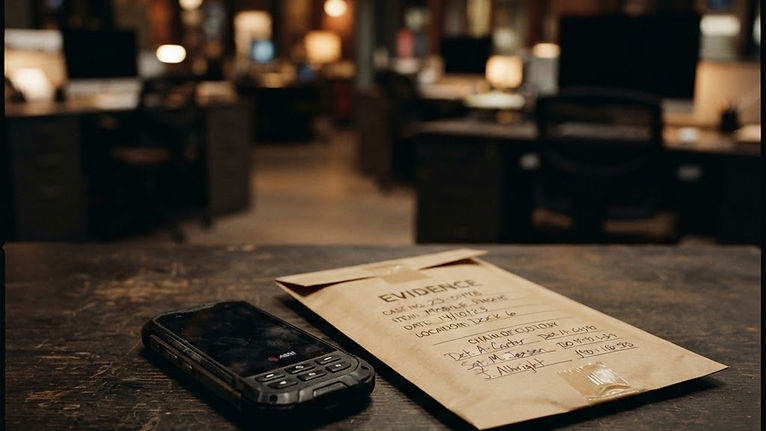
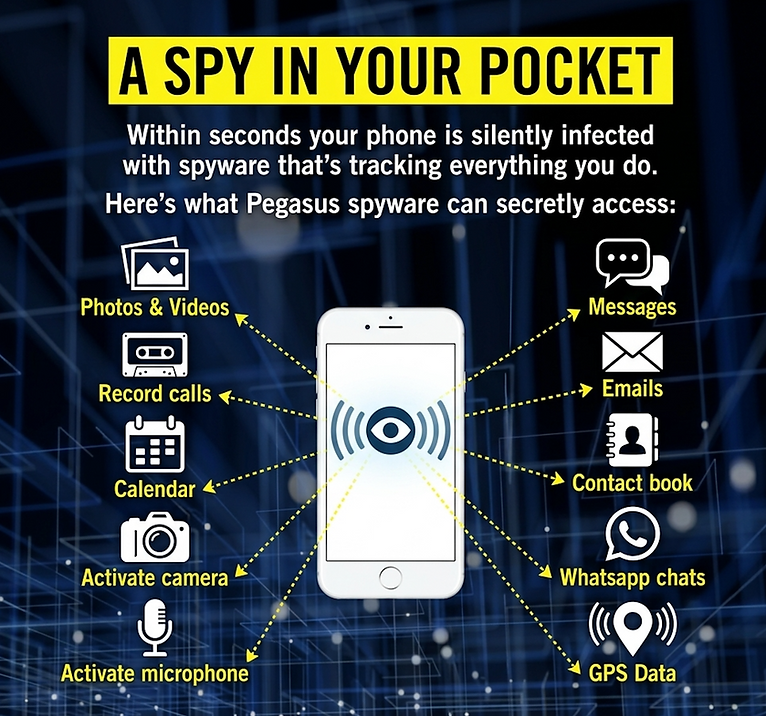
Physical seizure of a reporter's mobile device during field reporting or border crossing exposes sensitive communications to immediate forensic extraction. The Pegasus Zero-Click Archive analyzes the technical intersection between forensic mobile seizure and the systems designed to defend newsroom material. For media organizations navigating hostile reporting environments, keeping source identities and raw investigative documentation on local handset memory is no longer a sustainable operational posture.
The structural risk of mobile device seizure
When a journalist's phone is confiscated by authorities or hostile actors, the device ceases to be merely a communication tool and becomes a primary target for digital extraction. Modern digital forensic extraction platforms can bypass user interface locks, parse physical flash storage, and recover database files associated with messaging applications. If chat transcripts, contact lists, high-resolution media, and unencrypted drafts are stored locally in application caches, the identity of confidential sources and whistleblowers is immediately exposed.
Editorial workflows have historically relied on consumer end-to-end encrypted messaging applications. While these tools offer transport encryption, they store message histories, decrypted media, and contact metadata directly within the internal storage of the hardware. A compelled password entry, a forensic hardware exploit, or an emergency border inspection nullifies transport encryption by attacking the resting data directly. Once an agency takes physical control of an unlocked or exploitable handset, every source who communicated through that specific device is placed in jeopardy.
This reality requires newsrooms to reconsider the lifecycle of field data. Rather than treating mobile hardware as a digital vault, modern security posture treats field handsets as untrusted, disposable operational nodes. The foundational principle of modern source defense is rapid off-device custody: material collected during an investigation must move into organizational custody immediately and be excised from the handheld hardware before physical confiscation can occur.
Capabilities in detail
Undercover Agent for Media resolves this risk by compartmentalizing communication and evidence collection away from physical phone hardware. Through its Cyber-Link module, the system establishes encrypted communications and protected channels between editors, field journalists, and participating sources. By executing these interactions within isolated channels, sensitive exchanges can be kept off the handset itself, preventing local storage indexes from cataloging conversational histories and contact numbers.
Source protection workflows organize confidential informant and whistleblower relationships into compartmentalized workspaces. Each source relationship is tied directly to its specific investigation, with access limited strictly to authorized newsroom personnel. Newsroom supervisors manage this segregation through a centralized Command & Control dashboard. If a reporter operating in the field is detained, compromised, or relieved of their newsroom-issued Android handset, newsroom administrators can ensure the physical hardware yields zero persistent conversational archives or identifying source profiles.
To ensure raw investigative media and interviews remain defensible without staying on the reporter's phone, the system incorporates the Evidence Vault. Media captures transmitted from the field are timestamped, hashed, and stored off-device directly on the newsroom's own infrastructure. This architecture establishes a verified cryptographic record with access logging that supports editorial review and legal defense without leaving unencrypted artifacts in the handset's internal memory. CryptShield, an integrated quantum-resistant encryption layer, protects these confidential investigative files and operational material inside the organization's own systems against future cryptographic decryption threats.
For personnel operating in volatile environments, field journalist safety features are enabled on newsroom-issued Android devices. These devices report device status and voluntary safety location sharing to designated security personnel, backed by real-time emergency alerts and coordination via the Command & Control interface. Field collection features on these newsroom-issued devices remain disabled by default, strictly scoped to an authorized editorial purpose, and reviewed against applicable recording, privacy, and press-freedom laws prior to operational deployment. Purpose-built anonymous submission workflows remain independent, ensuring anonymous first contact belongs to dedicated intake channels rather than monitoring or field-safety features.
Legal frameworks and custodial discipline
Deploying field evidence architectures requires comprehensive alignment with legal frameworks governing surveillance, recording, and privacy. Digital captures that do not follow established custodial principles are vulnerable to exclusion in judicial challenges, libel disputes, and official reviews. Undercover Agent for Media is operated by authorized organizations under a documented, lawful purpose: an established editorial mandate, statutory press-freedom exemptions, or relevant institutional authorities.
Maintaining evidential integrity requires strict custody management. In technical terms, chain of custody refers to the verifiable, unbroken chronological documentation tracking the receipt, custody, transfer, analysis, and disposition of digital materials. In systems utilizing newsroom-controlled evidence custody, an initial cryptographic hash—such as a SHA-256 digest—is generated upon capture and synchronized with the central Evidence Vault. Every transfer, editorial review, and access event is recorded in tamper-evident access logs.
Media organizations operate as independent entities responsible for their own regulatory compliance. Operating such systems demands continuous editorial oversight, documented data retention policies, and formal legal review within the operational jurisdiction. Newsrooms must evaluate multi-party recording consent statutes, electronic communications acts, and local press protection laws. By establishing that field collection is strictly scoped and auditable, the organization can successfully withstand legal subpoenas without exposing confidential informants.
Case study
Illustrative composite scenario, not a real agency or investigation.
A regional investigative collective initiated an eight-month inquiry into systemic public procurement fraud involving industrial transport contracts. The reporting team consisted of two field journalists conducting on-site interviews across multiple municipal jurisdictions, coordinated by a senior editor and a newsroom legal advisor at the central desk. Because the investigation relied heavily on high-ranking administrative whistleblowers who faced criminal prosecution if discovered, the newsroom deployed Undercover Agent for Media on dedicated, newsroom-issued Android devices.
During month five of the inquiry, field journalists met an engineering director at an industrial site who provided internal manifests showing fraudulent fuel billing. Using Cyber-Link, the journalists opened a protected channel linked directly to the project workspace. Rather than saving photographs of the manifests and recorded testimony to the phone's local gallery or standard messaging folders, the captures were transmitted directly into the newsroom's Evidence Vault. The moment data transmission finished, files were automatically purged from the local handset storage, while the central repository generated timestamped cryptographic hashes stored on the collective's private servers.
Three days later, while traveling through a transport checkpoint, one of the field reporters was subjected to an administrative stop and sudden device confiscation by local transit authorities. The handset was retained for technical inspection for forty-eight hours. When forensic analysts extracted the physical device, they found no resting chat logs, no local database files of whistleblower documents, and no unencrypted contact references. Back at the newsroom, the editor observed the device status through the Command & Control dashboard, verified that the reporter had initiated a voluntary field safety check-in prior to the stop, and coordinated legal representation. The inquiry proceeded uninterrupted, with the original evidence secured and the whistleblower's identity completely shielded from the seized hardware.
Frequently asked questions
How does off-device custody differ from ordinary cloud backups?
Ordinary consumer cloud backups mirror files from a phone to a third-party corporate server, frequently leaving unencrypted temporary files, thumbnails, and metadata caches on the physical device. Furthermore, commercial cloud storage services can be compelled to provide user data via third-party subpoenas without alerting the publisher. Off-device custody through the Evidence Vault ingests and hashes data directly to newsroom-controlled infrastructure, removing local artifacts from the mobile handset while establishing a cryptographically verifiable chain of custody.
What happens if a field reporter's device is seized while an investigation is active?
Because communications and assets are processed through Cyber-Link and stored remotely within the newsroom's private Evidence Vault, the seized physical hardware contains no local database of source communications, decrypted media files, or contact registries. Newsroom administrators can immediately revoke the handset's access credentials via the Command & Control console, preventing unauthorized access into the broader operational workspace.
Can anonymous whistleblowers use the field platform for initial leaks?
No. Initial anonymous outreach belongs strictly within purpose-built anonymous submission architectures, such as Tor-based drop services. Undercover Agent for Media is engineered for managing authorized editorial investigations and protected communications after a confidential relationship or operational mandate is established. It is not an open, public-facing whistleblowing portal.
Does off-device collection comply with local eavesdropping and privacy laws?
Undercover Agent for Media is built with collection capabilities disabled by default. Deployment must be scoped to an authorized editorial purpose following formal legal review. The acquiring organization bears sole responsibility for complying with all relevant local and international recording, wiretapping, and privacy statutes.
Learn more
Maintaining source confidentiality against sophisticated forensic tools requires robust, infrastructure-level defenses. The Pegasus Zero-Click Archive regularly covers how technical extraction tools bypass standard mobile locks to access stored messaging threads. Media organizations facing elevated operational threats can explore secure newsroom infrastructure and review full technical capabilities by inspecting the Undercover Agent for Media platform.