Operative Safety: Command Oversight and Live AI Triage
An investigative breakdown of modern command oversight systems, analyzing how live location tracking, emergency alerts, and automated AI triage assist supervisors in detecting immediate operational threats while managing complex mobile field deployments.

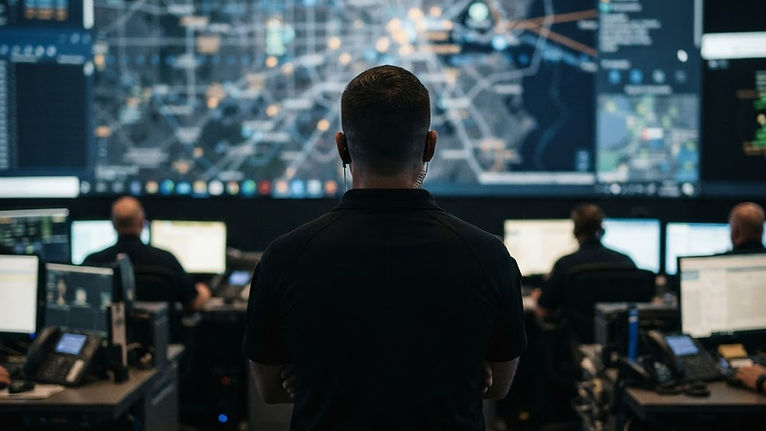
Covert field deployments place human operatives in dynamic, inherently hazardous working environments where operational cover can unravel in seconds. Supervisory teams monitoring these operations must maintain acute situational awareness without overwhelming tactical frequencies or burdening investigators with complex check-in protocols. Here at the Pegasus Zero-Click Archive, our technical evaluations of specialized monitoring systems demonstrate that rapid threat identification depends on continuous telemetry paired with automated, low-latency alert prioritization.
Historically, command centers relied on fragmented intelligence channels: static check-in calls, periodic surveillance vehicles, and blind radio links. If an operative encountered an unexpected confrontation or was diverted into an unmapped structure, supervisors often remained uninformed until scheduled contact windows lapsed. This operational blindness introduces severe physical risks to personnel and imperils long-term investigations, leaving tactical support teams poorly positioned to initiate rapid rescue operations.
Modern field oversight bridges this gap by merging continuous multi-sensor device monitoring with automated machine analysis. By processing real-time location feeds, environmental audio, and communication streams through focused analytical filters, command staff can immediately distinguish routine operational chatter from emerging tactical crises. This operational model transforms passive oversight into active, real-time agent protection while maintaining strict evidentiary and organizational boundaries.
Capabilities in detail
The tactical oversight ecosystem developed for the undercover agent tactical application is deployed on agency-provisioned Android handsets carried by authorized personnel. This client software maintains continuous, authenticated data links to a Command & Control (C2) console managed directly by the deploying department. Operating strictly within an established legal framework, the platform collects multidimensional environmental telemetry without exposing operational interfaces on the operative's physical screen.
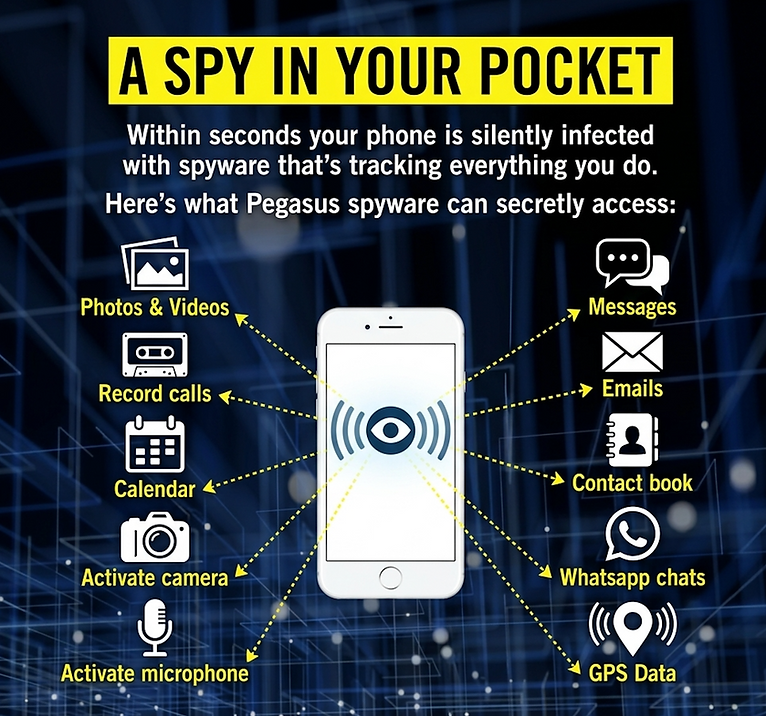
The command console ingests real-time GPS locations and movement histories, enabling supervisors to follow an operative's travel route across complex urban grids. Communication monitoring captures cellular phone calls, VoIP streams, and interactions occurring across major encrypted messaging platforms. In addition, the system intercepts short message service (SMS) texts, chat media files, contacts, calendar entries, email records, installed applications, and local file systems, augmented by ambient microphone audio and selective optical captures from front and rear device cameras.
To keep tactical supervisors focused during intensive field activities, the platform integrates an AI operational intelligence layer. This system executes automated transcription and translation of intercepted audio feeds, identifies latent risk patterns, generates structured summaries, and applies automated agent logic to cross-reference incoming data against active case records. Secure communications between the command team and the field device flow across Cyber-Link encrypted channels, while operational briefs and sensitive files are safeguarded on-premises using CryptShield quantum-resistant cryptographic algorithms.
Real-time location awareness and geofencing
Precise location awareness forms the baseline of operative safety. During high-risk operations, supervisors cannot rely on verbal location descriptions, which may be impossible for an undercover officer to convey while in the presence of suspects. Continuous GPS telemetry streams spatial coordinates directly to the agency dashboard, mapping the operative's position with precise geospatial markers and travel vectors.
Supervisors configure custom geofences—virtual geographical perimeters established around operational zones, suspect strongholds, or high-threat sectors. If an operative is transported outside an expected operating zone or enters an unbriefed location, the C2 platform triggers instantaneous visual and audible warnings. Tactical managers can immediately assess whether the deviation reflects an unexpected change in travel plans or a potential abduction requiring immediate tactical intercession.
Furthermore, the system logs historical movement trails, allowing command personnel to correlate physical locations with intercepted communications and ambient audio recordings. As outlined in operational reviews of command oversight and tactical monitoring, tracking movement histories against environmental context provides support teams with the precise spatial clarity required to position chase teams and covert backup units effectively without burning the operative's physical cover.
Emergency alerts and tactical coordination
When an operative's cover is compromised, emergency response times must be measured in seconds. Covert operations require silent, unobtrusive mechanisms to signal distress without alerting surrounding individuals. The platform incorporates covert emergency triggers within the agency-managed handset that allow the operative to initiate immediate high-priority alerts back to the command center.
Upon activation of an emergency signal, the C2 dashboard immediately shifts into tactical response mode. The platform prioritizes the operative's telemetry, boosting GPS polling rates, activating ambient microphone feeds, and queuing live camera snapshots to give supervisors immediate situational awareness. Chase teams and close-cover units receive dynamic location updates, enabling rapid interception along the operative's exact route.
All emergency tasking directives and intelligence coordination exchanges between command personnel and tactical backup elements are routed through Cyber-Link encrypted channels. This end-to-end protected communication architecture prevents hostile monitoring or interception by sophisticated adversaries operating local radio scanners or commercial IMSI catchers, ensuring tactical coordination remains entirely confidential throughout the extraction.
AI operational intelligence and alert triage
Command supervisors overseeing complex, multi-target operations face significant cognitive overload. Listening to hours of continuous ambient audio, reading high-volume chat transcripts, and evaluating location shifts across multiple squads strains human attention, introducing the risk that subtle warning signs will be overlooked. The platform addresses this limitation by deploying targeted AI agents that correlate intelligence streams and triage operational alerts automatically.
The intelligence subsystem performs real-time speech-to-text transcription and multi-language translation on intercepted operational audio. Automated natural language models scan these transcripts for specific risk patterns, such as spoken threats, unexpected mentions of weapons, sudden shifts in operational venues, or indicators that targets suspect law enforcement presence. When a risk pattern is recognized, the system elevates the event to the top of the supervisor's alert queue with an automated summary and contextual audio snippet.
Beyond basic keyword matching, the internal AI agents cross-reference real-time captures against wider operational files. If a new phone number, vehicle descriptor, or alias appears in an intercepted chat, the platform immediately cross-references historical files to surface relevant links. This rapid correlation allows supervisors to identify hidden threats—such as an unbriefed associate with a violent criminal background arriving at a meeting—allowing command personnel to provide proactive tactical warnings to field teams.
Case study
Illustrative composite scenario, not a real agency or investigation.
A specialized narcotics and firearms interdiction task force launched an investigation into an armed criminal network brokering illicit weapons shipments. An undercover investigator was tasked with meeting a regional logistics manager to negotiate an equipment transfer at an industrial rail siding. The operative carried an agency-issued mobile handset provisioned with the dedicated tactical software, linked back to an operations center located ten miles away.
During the initial meeting, the primary target unexpectedly instructed the undercover officer to enter an unmarked van, diverging from the agreed outdoor venue. As the vehicle departed, the C2 dashboard instantly triggered an alert: the operative had breached an established operational geofence, and the velocity vector indicated rapid transit toward an unmonitored commercial warehouse. The tracking system mapped the vehicle's progress across side streets, updating tactical support squads positioned throughout the district.
Inside the vehicle, the ambient audio capture streamed continuously over Cyber-Link to the command center. The automated AI intelligence engine performed real-time transcription of the muffled speech inside the cabin. Two minutes into the transit, the platform flagged an urgent risk pattern: the automated engine identified repeated phrases indicating the suspects intended to conduct an armed search of the operative upon arriving at the warehouse.
Alerted by the prioritized AI warning, the tactical supervisor authorized an immediate intervention. Utilizing live GPS coordinates streamed by the platform, marked chase units and tactical tactical teams established an intercept perimeter along the vehicle's route, executing a high-risk traffic stop three blocks before the warehouse. The operative was safely recovered, the suspects were apprehended without injuries, and the operational audio was preserved as primary evidence for trial.
Governance, legal limits, and technical sovereignty
Deploying high-capability mobile oversight technologies requires absolute alignment with constitutional mandates, statutory surveillance rules, and clear agency policies. Real-time tactical monitoring tools must be deployed strictly to protect personnel and advance lawful investigations, never as general monitoring systems outside judicial oversight. Operating agencies bear complete responsibility for establishing legal justifications, obtaining appropriate judicial warrants, and enforcing internal retention protocols.
The technical design of this platform limits collection exclusively to agency-owned devices provisioned to authorized personnel executing documented missions. It does not provide mechanisms for remote over-the-air exploitation of unknown consumer devices. The platform's source code is provided completely to the acquiring agency, which executes an independent audit and deploys the entire backend on its own private, on-premises servers.
Maintaining complete technical sovereignty shields operational data from commercial exposure and external vendor access. Because no telemetry, voice recordings, or intelligence files traverse commercial third-party cloud infrastructure, the host agency maintains strict compliance with national privacy and security mandates. Independent technical audits allow internal oversight bodies to confirm that surveillance systems operate strictly within statutory boundaries while safeguarding the lives of undercover personnel.
Frequently asked questions
How does the platform minimize cognitive burden on command staff?
The platform uses automated AI intelligence agents to transcribe audio, translate foreign languages, and triage incoming alerts based on detected risk patterns. Instead of requiring supervisors to review hours of non-relevant background audio, the system prioritizes critical threats—such as perimeter breaches, discussions of violence, or operational deviations—allowing tactical personnel to focus on high-impact events.
Can the covert monitoring application be detected by targets inspecting the phone?
The dedicated Android application runs without visible system notifications or active foreground interfaces. It does not display operational files, recorded audio snippets, or tasking directives within standard gallery or file explorer directories. If a suspect handles the phone, the device exhibits the behavior of an ordinary personal or business smartphone, mitigating the risk of operational compromise.
What occurs if the handset enters an area without cellular reception?
If an operative enters a subterranean structure or remote sector lacking network connectivity, the application queues encrypted telemetry and ambient recordings locally within protected execution memory. The moment the handset reconnects to an available network, the platform offloads queued data over Cyber-Link to the C2 dashboard, restoring real-time situational awareness and logging historical movement.
Why is complete source code provided to the acquiring agency?
Providing complete source code ensures operational sovereignty and verifiable security. Acquiring agencies can perform comprehensive independent security audits to confirm the absence of undocumented vulnerabilities or external backdoors. Hosting the audited software on the agency's own infrastructure ensures that critical operational data remains entirely within sovereign government custody.
Learn more
Balancing operative safety with disciplined command oversight demands reliable technology, robust legal authorization, and rigorous technical control. Law enforcement executives, tactical commanders, and specialized operational units seeking technical specifications, architecture overviews, and on-premises licensing details can examine the official undercover agent command platform documentation. Further analysis of mobile surveillance technologies, forensic standards, and regulatory jurisprudence is regularly published by our team at the Pegasus Zero-Click Archive.