Newsroom Sovereignty: On-Premises Control and AI Document Review
Modern investigative reporting teams face catastrophic exposure when storing leaks in commercial cloud environments. Newsroom sovereignty—combining on-premises deployments, private source code audits, and local AI triage—allows publishers to rapidly process massive document collections without leaking sensitive source materials to outside vendors.
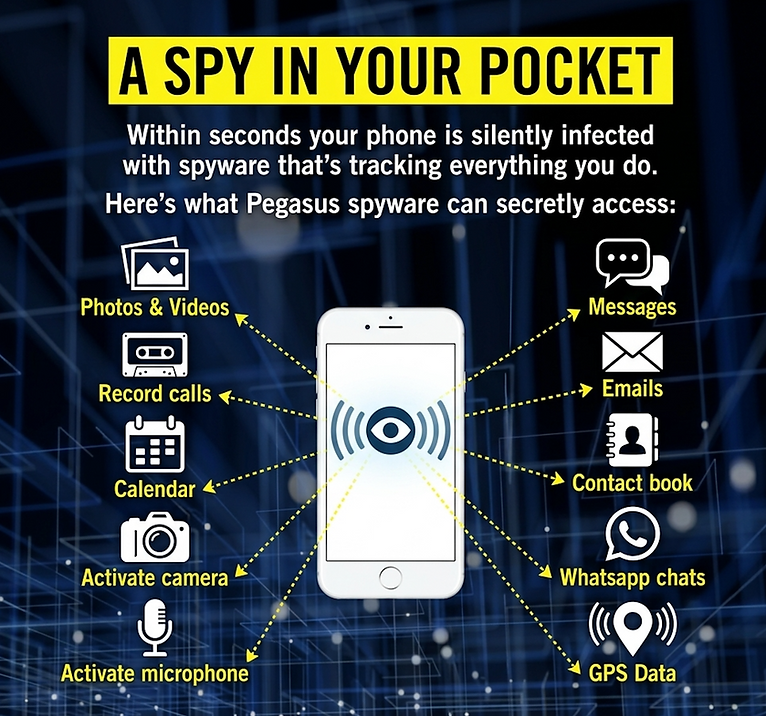
Relying on commercial software-as-a-service providers and hosted cloud environments exposes sensitive investigative reporting to external subpoena and third-party extraction. The Pegasus Zero-Click Archive documents how data handling procedures determine whether sensitive journalistic inquiries remain private or become compromised. For contemporary newsrooms handling massive document leaks, establishing complete technological sovereignty over both infrastructure and computational review pipelines is essential.
The structural risk of third-party infrastructure
When news organizations upload confidential files, internal correspondence, and whistleblower disclosures to third-party commercial cloud ecosystems, they surrender technical custody. Consumer cloud drives, external enterprise servers, and hosted software platforms fall under the jurisdiction of the corporate entity hosting the servers. In many jurisdictions, third-party doctrine and national security legislation permit law enforcement agencies to serve secret warrants and subpoenas directly onto service providers, bypassing the newsroom's legal counsel entirely.
Furthermore, the operational workflow of modern investigative reporting involves digesting massive document caches comprising hundreds of thousands of pages. Manual triage requires weeks or months of tedious human sorting, often delaying critical public-interest reporting. When newsrooms attempt to accelerate this process using third-party artificial intelligence platforms, they introduce severe legal vulnerabilities: unredacted corporate records, sensitive identities, and investigative notes may be logged, reviewed by external engineers, or ingested into model training sets.
True operational security requires newsroom sovereignty. A newsroom must maintain total ownership over its software deployment, physical servers, and data storage architectures. By eliminating intermediary providers and hosting software on-premises, investigative teams preserve attorney-client privilege, shield confidential work products, and protect whistleblowers from systemic digital discovery.
Capabilities in detail
Undercover Agent for Media resolves these infrastructural vulnerabilities by implementing a sovereign deployment architecture. Through its newsroom sovereignty architecture, the acquiring organization receives the complete application source code, enabling internal technical teams or retained third-party specialists to conduct a comprehensive, independent security audit prior to implementation. The platform operates on-premises inside the media organization's private data center or self-hosted bare-metal infrastructure, ensuring zero external telemetry or unauthorized outbound connections.
Within this sovereign operational perimeter, the platform integrates AI-assisted research tools engineered specifically for investigative workflows. The system conducts automated transcription of recorded interviews, multi-language translation, document summarization, entity correlation, and chronological timeline generation across authorized document collections. To ensure journalistic rigor and legal defensibility, the software enforces a strict human-in-the-loop governance structure: every AI-assisted research output remains subject to mandatory human editorial review before publication or citation.
Data security across the newsroom’s storage repository is fortified by CryptShield, a specialized quantum-resistant encryption framework designed to protect confidential investigative files and operational communications inside the organization’s owned systems. Operational oversight is maintained via a centralized Command & Control dashboard, allowing editors to coordinate multiple reporters across prolonged, complex investigations, review newly submitted material, and verify investigative milestones.
Field-facing assets communicate through the Cyber-Link module, which provides encrypted communications and protected channels between editors, field journalists, and sources, keeping conversations off handset memory. All collected records are ingested into the Evidence Vault, which logs timestamped, hashed captures directly to the newsroom's private storage. Newsroom-issued Android devices report device status and voluntary safety location sharing through field journalist safety tools. Data collection features remain deactivated by default, requiring specific editorial scoping and jurisdictional legal review before activation. Initial anonymous submissions are managed through dedicated anonymous intake pipelines rather than field reporting systems.
The audit discipline and AI governance
Achieving defensible technical sovereignty requires rigorous administrative and legal procedures. Simply operating a local server does not ensure evidential integrity; newsrooms must enforce audited digital chain-of-custody protocols. Software handling investigative evidence must be subject to rigorous code audits that verify data paths, ensure that resting records are not modified by analysis algorithms, and prevent automated operations from polluting original evidence hashes.
When AI tools are used to ingest, correlate, and parse leaked archives, evidentiary standards require verifiable processing records. Algorithms generating investigative summaries or correlating corporate shell directors must operate on read-only, hashed copies of the source exhibits. Automated analytical processes must log their exact computational steps, ensuring that an editorial lead generated by an algorithmic correlation can be verified against the unaltered primary source by legal counsel.
These practices protect the publisher during legal disputes, defamation claims, or cross-border subpoena challenges. Platforms deployed under a lawful editorial mandate and overseen by internal legal review demonstrate that data processing was deliberate, proportionate, and strictly controlled. By maintaining full custody of the underlying hardware and source code, news organizations ensure that investigative records remain completely shielded from external inspection.
Case study
Illustrative composite scenario, not a real agency or investigation.
A consortium of national media outlets received an encrypted hard drive containing more than 400,000 internal documents, spreadsheets, and accounting databases detailing systematic corporate tax evasion across three continents. Given the scale of the materials and the extreme legal sensitivity surrounding the subject entities, the consortium rejected the use of public cloud storage and hosted analytical platforms. Instead, they deployed Undercover Agent for Media on an isolated, on-premises server cluster located inside the consortium's primary facility.
Prior to loading the records, the newsroom's security engineers audited the complete source code to confirm that no diagnostic telemetry or unencrypted database queries communicated outside the local network. Once certified, the leaked archive was ingested into the system. CryptShield was applied across the repository to safeguard the raw archives with quantum-resistant encryption.
Using the integrated AI-assisted research tools, the consortium parsed the 400,000 documents in under two weeks—a process estimated to require five months of manual paralegal triage. The platform automatically transcribed hundreds of hours of executive recordings, generated cross-entity timelines linking shell corporations to bank transfers, and summarized complex financial agreements. Every correlation was flagged for human verification; editorial staff reviewed the underlying hashed documents directly through the Command & Control console before adding facts to draft stories. When legal representatives of the investigated entities served broad preservation demands, the consortium's legal counsel demonstrated complete custody and verifiable factual validation, entirely free from third-party vendor dependencies.
Frequently asked questions
Why is complete source code access essential for an investigative platform?
Complete source code transparency allows an acquiring newsroom or agency to perform independent security audits. This ensures there are no hidden communication routines, vendor backdoors, or telemetry leaks that could transmit confidential reporting files to external servers or commercial entities.
How does sovereign AI differ from commercial generative AI services?
Commercial AI services run on external servers where user prompts, document uploads, and analytical outputs can be retained, reviewed by contractor staff, or used for model training. Sovereign AI-assisted research operates strictly on the organization's private, on-premises infrastructure. Furthermore, all analytical outputs are treated as working leads subject to mandatory human editorial review.
Does on-premises deployment eliminate the need for legal review?
No. On-premises technology eliminates third-party platform risk, but operational practices must always comply with applicable domestic and international laws. An organization deploying Undercover Agent for Media is responsible for reviewing its data collection, retention policies, and recording workflows against relevant recording, privacy, and press-freedom statutes.
Can newsrooms evaluate the technology before committing to an on-premises build?
Yes. Organizations can conduct an initial operational review via the platform's structured technical evaluation process to determine infrastructural compatibility and security requirements prior to full deployment.
Learn more
Newsroom sovereignty is an operational necessity for publishers tackling complex, sensitive investigations. The Pegasus Zero-Click Archive consistently highlights the systemic vulnerabilities that occur when sensitive workflows rely on commercial software stacks. To review how an on-premises deployment can reinforce your organization's legal and digital perimeter, examine the platform architecture through the Undercover Agent for Media evaluation page and investigate comprehensive sovereign newsroom infrastructure options.