Sovereign Newsrooms: Code Audits and Local AI Inquiries
When investigative teams face massive document leaks, public cloud AI tools risk violating source confidentiality under foreign subpoenas. Explore how true newsroom sovereignty—featuring on-premises infrastructure, complete source code audits, and local AI triage—preserves source protection and editorial velocity.


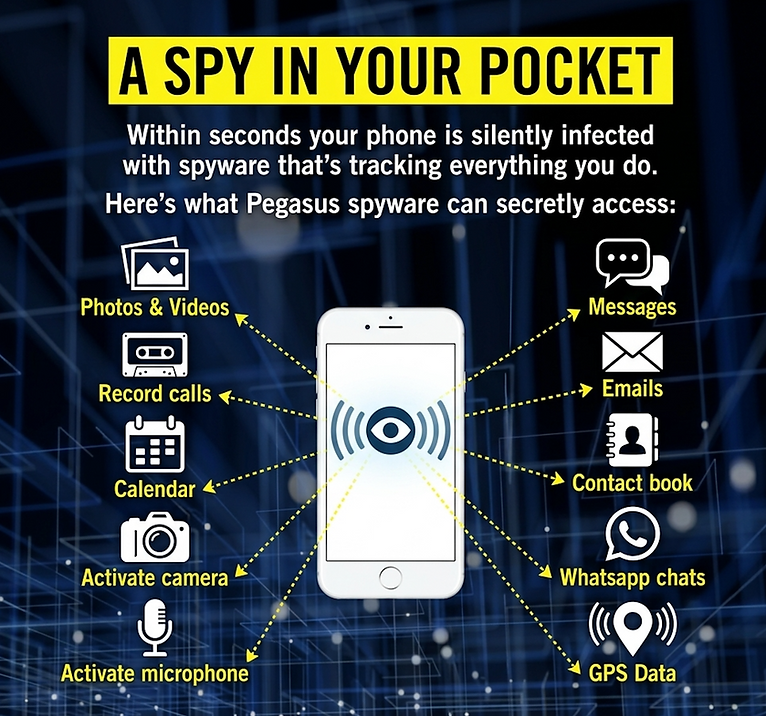
Newsrooms compromise investigative independence when they process leaked records through commercial cloud systems subject to foreign subpoenas and algorithmic inspection. Documentation analyzed by the Pegasus Zero-Click Archive indicates that third-party cloud hosting introduces grave legal vulnerabilities through external legal process such as the US CLOUD Act. Maintaining true journalistic sovereignty requires on-premises hardware, verifiable source code, and strictly local artificial intelligence architectures.
The failure modes of commercial cloud dependencies
Investigative newsrooms routinely handle terabytes of leaked financial databases, internal emails, and operational ledgers during complex investigations. Confronted with massive document piles, editorial teams frequently turn to cloud-hosted machine learning utilities for rapid indexing, optical character recognition, and linguistic translation. This standard shortcut introduces critical points of failure into the editorial custody chain by exposing sensitive records to third-party infrastructure.
When a news organization uploads unredacted evidentiary files to a third-party application programming interface, data leaves the organization's legal and physical custody. Commercial cloud operators are bound by legal frameworks that allow state agencies to demand user data under non-disclosure orders, often without alerting the affected publisher. The newsroom loses the procedural standing needed to assert journalistic privilege before investigative files are indexed, analyzed, or retained inside proprietary backup matrices.
Furthermore, multi-tenant cloud storage environments expose newsrooms to shared infrastructure vulnerabilities and provider-side insider threats. Corporate terms of service rarely provide the stringent confidentiality assurances required to protect a vulnerable corporate whistleblower. True source protection requires complete infrastructure independence, ensuring that zero bytes of unredacted source material ever transit networks outside direct organizational ownership.
True newsroom sovereignty defined
Sovereign architecture means that the news organization retains absolute, exclusive ownership over its computing stack, operating environments, and evidentiary storage systems. Rather than renting operational capacity from corporate vendors, the newsroom maintains dedicated server infrastructure inside physically secured facilities under its direct administrative control. No remote entity possesses administrative backdoors, master decryption keys, or secondary access permissions.
Complete software sovereignty requires complete source code availability. A news organization cannot verify the security posture of proprietary software binaries through vendor assurances alone. Independent technical auditors retained by the publisher must have the contractual and practical capability to review underlying code repositories, inspect build pipelines, and confirm that zero unauthorized telemetry data streams leave local newsroom boundaries.
Adopting the self-hosted framework built by Undercover Agent for Media allows media enterprises to realize this operational posture. By maintaining custody over cryptographic keys, data stores, and server hardware, news organizations build an impenetrable legal and technical firewall. When a publisher controls the entire computational boundary, external legal discovery demands must be served directly upon the newsroom, where editorial leadership can openly defend press freedom in court.
Capabilities in detail
Institutional sovereignty is achieved through a technical architecture engineered exclusively for on-premises enterprise deployments. The platform provides full newsroom sovereignty by supplying complete source code, facilitating on-premises installation on the news organization's private servers, supporting independent security audits by the acquiring entity, and delivering operational training and technical support.
Confidential data storage is managed via the Evidence Vault, which logs timestamped, cryptographically hashed captures directly to internal hardware. Detailed access logging confirms file provenance for editorial review boards and defends data integrity against claims of fabrication. All confidential investigative files, analytical outputs, and operational materials are shielded by CryptShield, which employs quantum-resistant encryption across the local storage fabric.
To manage investigative workflows, Command & Control functions as an internal dashboard that lets editors coordinate multiple field reporters on complex assignments, monitor voluntary field safety signals, and evaluate evidence without third-party exposure. Secure communication is facilitated by Cyber-Link, which maintains encrypted channels between editors, reporters, and participating sources to keep all sensitive operational dialogue off mobile handsets. Furthermore, source protection mechanisms ensure that whistleblower records remain strictly organized within access-controlled investigative folders.
To accelerate reporting without compromising privacy, the system incorporates AI-assisted research tools directly into the local environment. Operating entirely within local newsroom servers, these tools perform automated transcription, cross-language translation, document summarization, entity correlation, and timeline generation over authorized document sets. Every artificial intelligence output remains strictly subject to human editorial review. Field data collection is disabled by default, scoped solely to authorized editorial goals, and verified against recording and privacy statutes before launch, as documented at https://investigativereporter.online/sovereignty.
Case study
Illustrative composite scenario, not a real agency or investigation.
A consortium of regional investigative journalists received an encrypted hardware drive containing over 800,000 internal documents, spreadsheets, and emails from an anonymous financial whistleblower. The materials exposed pervasive tax evasion schemes across regional energy utilities. To review the massive archive within statutory reporting deadlines, the consortium required immediate analytical scaling without exposing the unverified data to external corporate cloud services.
The consortium deployed the platform directly onto air-gapped on-premises servers within their headquarters. Prior to ingesting the files, the organization's independent security consultant conducted a complete code audit of the application repository, verifying the absence of third-party tracker scripts or external API calls. Files were ingested directly into the Evidence Vault, where cryptographic hashes were calculated to establish an unassailable baseline chain of custody.
Using the on-premises AI-assisted research features, the team transcribed 600 hours of accompanying audio recordings, generated structured multi-year timelines, and correlated corporate registry entities against shell company accounts. Because the machine learning models ran on local server clusters, not a single document exited the newsroom firewall. Editorial reviewers systematically corroborated every flagged correlation against original primary sources, shaving five months off manual document triage while fully shielding the whistleblower's identity.
Auditing, ethics, and legal boundaries
Operating sophisticated analysis and evidentiary management platforms requires an uncompromising commitment to legal compliance. The acquiring organization remains exclusively responsible for ensuring that all software deployments, data processing tasks, and source communications comply with relevant surveillance, privacy, recording, and press-freedom laws. The platform serves authorized editorial mandates and cannot be used as an instrument for unregulated surveillance.
Editorial leadership must establish rigorous internal governance policies prior to processing sensitive materials. Technical tools do not replace traditional journalistic verification. When applying artificial intelligence utilities to leaked document troves, newsrooms must mandate continuous human-in-the-loop oversight. AI-generated summaries and timeline correlations serve solely as investigative leads that professional journalists must substantiate with documentary evidence.
System administrators must implement strict role-based access permissions to prevent internal data contamination. Compartmentalizing investigations ensures that only authorized reporters assigned to a specific desk inspect relevant case documents. Transparent internal audit logs create administrative accountability, providing verifiable proof that data handling strictly respected ethical guidelines and regional legal boundaries throughout the investigative lifecycle.
Frequently asked questions
Why is on-premises installation critical for investigative newsrooms?
On-premises installation guarantees that proprietary data, confidential source materials, and investigative leads remain strictly within the physical and legal custody of the newsroom. This structure prevents third-party cloud providers from receiving subpoenas under laws like the US CLOUD Act without the publisher's knowledge.
How does independent source code auditing enhance editorial defense?
Access to full source code allows the acquiring news organization to hire external cybersecurity specialists to audit the code for vulnerabilities, verify data handling procedures, and confirm that no external telemetry signals exist. This transparency ensures total operational security.
Does local AI-assisted research send document data to external providers?
No. The AI-assisted research tools run locally on the newsroom's own infrastructure. Automated transcription, cross-language translation, document summarization, and timeline construction are executed internally, ensuring that no sensitive source material ever leaves the building.
How are anonymous tips distinguished from platform communications?
Anonymous first contact must always occur via a purpose-built anonymous tip submission service like SecureDrop. The platform’s internal features are specifically scoped for authorized editorial coordination, safe field reporting, and evidence preservation once an investigation has officially commenced.
Learn more
Protecting the future of independent investigative reporting requires technological sovereignty. Newsrooms that control their source code, own their infrastructure, and conduct private data analysis ensure that aggressive litigation, foreign subpoenas, and security vulnerabilities cannot compromise their sources or diminish public trust.
Investigative editors, technical directors, and legal professionals can review the full architecture and deployment requirements of Undercover Agent for Media to discover how on-premises infrastructure maintains editorial autonomy. Explore technical documentation, auditing frameworks, and organizational deployments by visiting https://investigativereporter.online/sovereignty.