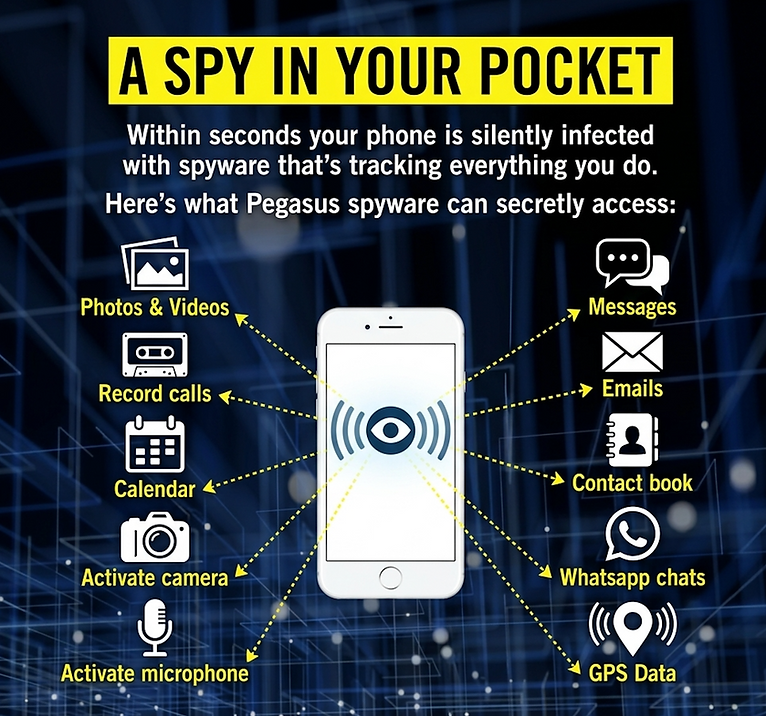
Shielding Whistleblowers When Mobile Handsets Face Seizure
When investigative journalists face border checkpoints or hostile confiscation, local handset storage turns reporting phones into liability engines. Maintaining source protection across multi-month inquiries demands moving evidence off physical endpoints and into organizationally controlled repositories protected by strict access boundaries and legal review.
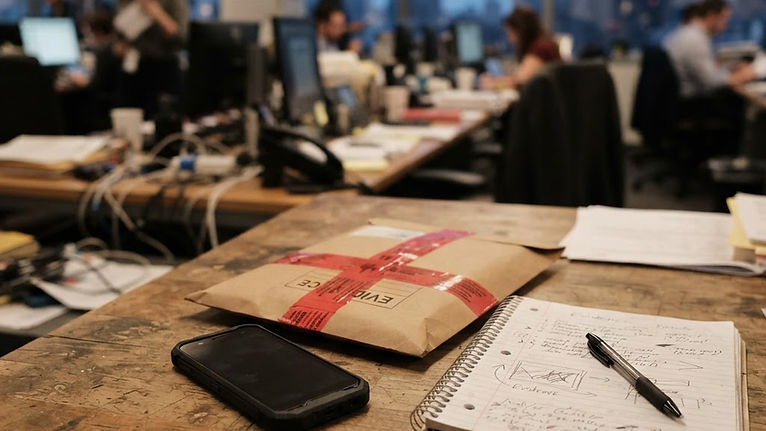
When a field reporter's mobile device is confiscated at a border crossing or during a targeted intervention, the physical hardware should never become a roadmap to their confidential informants. At the Pegasus Zero-Click Archive, documentation of zero-click forensic extractions and forced handset extractions reveals that local mobile storage remains the single most common vulnerability leading to source exposure. Shielding whistleblowers across prolonged investigations requires shifting operational material entirely off physical endpoints and into verifiable, organization-managed repositories.
The structural risk of physical device capture
Mobile operating systems were fundamentally designed around consumer convenience rather than adversarial evidentiary protection. Even when encrypted at rest, a smartphone carried across border checkpoints or seized under contested search warrants remains vulnerable to compelled biometric unlocking, hardware forensic dumps, and unpatched baseband exploits. For an investigative journalist holding months of correspondence with a public-sector whistleblower, keeping that material on a local flash drive means that a single hostile physical interaction can dismantle the entire operational firewall protecting the informant.
Traditional newsroom workflows often compound this risk by relying on decentralized consumer applications. A reporter might maintain a secure messaging thread on an individual handset, store draft audio recordings in mobile memo tools, and retain downloaded leak documents in a local cache. If that handset is seized by authorities or adversarial private corporate actors, forensic recovery tools can extract not merely the messages themselves, but critical contextual metadata—such as base-station timestamps, device sensor metrics, and network identifier handshakes. This metadata allows forensic teams to reconstruct the timeline and identify the source even if text fragments appear scrubbed.
Mitigating this danger requires an architectural separation between the reporter's immediate operational interface and the persistent evidentiary record. Undercover investigations demand that field notes, source records, and corroborating documents never reside on the handset's internal storage any longer than the exact moment of transmission. Deploying newsroom-controlled evidence custody guarantees that an unexpected device confiscation yields only an inert piece of hardware stripped of source identities, investigation registries, and historical leak materials.
Capabilities in detail
The architectural model behind Undercover Agent for Media decouples communication, record storage, and field operations to prevent single-point handset failures. Rather than depending on ad-hoc phone storage, the platform organizes operational workflows through dedicated modules designed for strict newsroom governance.
First, the Cyber-Link module provisions encrypted communications and protected channels connecting editors, field journalists, and participating sources. By executing these exchanges through protected channels that keep sensitive correspondence off the physical handset itself, the platform ensures that messages, interview transcripts, and file attachments do not persist in local mobile caches. When a source provides vital corroboration, the interaction occurs inside an ephemeral session that routes data directly to internal organizational infrastructure rather than saving artifacts into the device filesystem.
Second, the Evidence Vault operates as a centralized, off-device repository. When a journalist captures raw audio, photographic records, or documentation in the field, the material is immediately timestamped, cryptographically hashed, and transmitted off-device onto the newsroom's own infrastructure. This design secures an unbroken chain of custody with comprehensive access logging that supports subsequent editorial verification and robust legal defense against subpoena challenges. Handsets do not retain local backups; once hashed and ingested, the data exists solely within the protected vault.
Third, operational material and investigative files are defended using CryptShield, a layer of quantum-resistant encryption that secures confidential records across the newsroom's local architecture. Access to whistleblower relationships and confidential informant material is strictly partitioned: files are organized directly inside their respective investigation workspaces, with permissions limited strictly to authorized editorial and legal personnel. Newsroom-issued Android devices maintain data collection features in a disabled-by-default posture, scoped exclusively to defined editorial authorizations and vetted against local press-freedom and recording statutes.
Oversight and press-freedom compliance
Deploying high-assurance investigative infrastructure requires strict adherence to constitutional norms and legal mandates. Operational software cannot serve as a blanket substitute for procedural integrity; the organization deploying it maintains sole responsibility for ensuring that all recording, communication monitoring, and data retention comply with local jurisdiction standards, press-shield statutes, and surveillance laws. Editorial leadership must define clear scopes of inquiry before any project-level channel is established.
Within this framework, anonymous first contact must never be conflated with ongoing operational monitoring. Initial outreach by high-risk whistleblowers belongs in purpose-built anonymous submission architectures like SecureDrop, which function over anonymizing networks without requiring endpoint software installation. Undercover Agent for Media functions in the subsequent phase: managing the ongoing investigative workflow, handling verified source communications, and safeguarding corroborating evidence once a lawful editorial mandate has been formally authorized by newsroom management.
Editorial boards and legal counsel must establish documented retention and destruction policies for all assets ingested into the Evidence Vault. In jurisdictions where journalist-source confidentiality is subject to narrow legislative exceptions, timestamped and cryptographically verified custody logs allow newsrooms to substantiate that materials were handled according to rigorous journalistic standards. This programmatic defense establishes that evidence was neither tampered with nor accessible to non-editorial parties, blunting bad-faith subpoenas and legal discovery efforts.
Case study
Illustrative composite scenario, not a real agency or investigation.
A regional metropolitan newsroom undertook an eight-month investigative project looking into municipal procurement fraud and illegal industrial waste dumping along an urban river basin. The investigation relied on an active technical insider within a state regulatory agency who risked criminal prosecution under national secrets legislation if exposed, alongside two investigative journalists operating on-site near processing facilities.
Midway through the project, one field reporter was detained at an unannounced regulatory checkpoint near a waste transfer site. Local security personnel impounded the journalist's newsroom-issued Android mobile device under a broad administrative seizure warrant and subjected the handset to commercial hardware forensics in an effort to extract contact lists, recorded audio interviews, and location histories. Because the newsroom had deployed the evidence custody platform, the device contained zero local databases, zero cached messaging records, and no stored media files. The operational collection software on the handset had been scoped strictly under legal review, with collection toggles disabled by default.
Throughout the preceding months, all correspondence with the whistleblower had taken place exclusively via Cyber-Link protected channels, with documentation transferred directly to the newsroom's internal Evidence Vault. The hashing algorithms established verified entry timestamps on the publisher's on-premises servers, preventing municipal attorneys from claiming the files were fabricated after the detention. The whistleblower's identity remained insulated within the protected channel hierarchy, visible only to the managing editor and legal counsel. The reporter was released within twenty-four hours without the compromise of a single source.
Frequently asked questions
How does off-device custody differ from consumer cloud storage solutions?
Consumer cloud backup systems automatically mirror mobile file systems, leaving unencrypted previews, synchronization metadata, and token caches on the handset itself. Off-device custody through the Evidence Vault ingests, cryptographically hashes, and timestamps files directly into newsroom-owned infrastructure while immediately stripping the file payload from the mobile client, leaving no recoverable image for forensic mobile acquisition tools.
Can field reporters operate the platform during unexpected network dropouts?
In scenarios where field reporters lose cellular or data connectivity, the system maintains ephemeral, encrypted staging buffers that isolate data from the primary device file system. The moment an authorized network handshake is restored, the buffered payloads are transmitted to the newsroom, hashed, and purged entirely from the mobile handset without writing plain-text artifacts to flash memory.
Does the platform replace traditional anonymous tip submission platforms?
No. First contact with anonymous whistleblowers must always occur through purpose-built anonymous submission portals operating over privacy-preserving networks. Undercover Agent for Media is deployed only after initial contact has been verified and a structured, editorially authorized investigation is initiated under formal newsroom management.
Who holds the encryption keys for files secured by CryptShield?
The newsroom retains exclusive ownership of all cryptographic keys. Under the platform's sovereign on-premises deployment architecture, no vendor, external cloud provider, or third-party entity holds escrow copies of keys, ensuring that materials cannot be accessed via third-party subpoena or extralegal cloud-interception warrants.
Learn more
Securing sensitive sources requires an organizational architecture that assumes mobile hardware will eventually be seized, lost, or subjected to forensic exploitation. Relying on personal messaging applications or consumer handsets to shelter whistleblowers places lives and livelihoods at unacceptable risk. Newsrooms covering high-stakes accountability stories must take programmatic ownership of their communication channels, audit trails, and data archives.
To examine how your editorial desk can operationalize off-device custody, encrypted communication channels, and verifiable audit chains, explore the technical specifications of Undercover Agent for Media. Detailed architectural overviews for deploying on-premises vaults and evaluating threat boundaries are accessible through the platform evaluation documentation.