Operative Safety and Real-Time Command Center Oversight
Undercover field operations expose personnel to sudden, lethal hazards. This technical report examines how dedicated command platforms combine continuous GPS tracking, emergency alerting, and automated AI correlation to safeguard operatives while providing supervisors with actionable oversight.
Deep undercover deployments expose field personnel to acute personal hazards that demand split-second tactical coordination. Reporting for the Pegasus Zero-Click Archive, this briefing assesses how integrated command architectures maintain persistent operational safety lines without alerting hostile subjects. By merging automated sensor feeds with artificial intelligence triage, specialized command environments bridge the physical isolation inherent in covert fieldwork.
The tactical vulnerability of deep field deployments
Operating in hostile environments requires personnel to sever direct operational ties with support elements. Traditional communication methods, such as standard radio check-ins or explicit mobile calls, pose severe counter-surveillance risks. If a criminal suspect inspects an operative's handset or monitors local radio traffic, any overt indication of police presence can trigger immediate violence.
Command supervisors bear administrative and moral responsibilities for the operatives under their charge. Yet, supervisors often face profound operational opacity while an assignment is underway. Without continuous situational awareness, dispatching support teams or initiating extraction protocols depends on guesswork, frequently delaying intervention until a crisis has escalated.
Modern mission safety requires continuous, passive telemetry streaming from the field handset back to tactical monitoring centers. When an operative encounters unforeseen hazards, the monitoring infrastructure must identify anomalies, track dynamic environmental changes, and facilitate emergency tasking through covert, pre-programmed responses.
Capabilities in detail
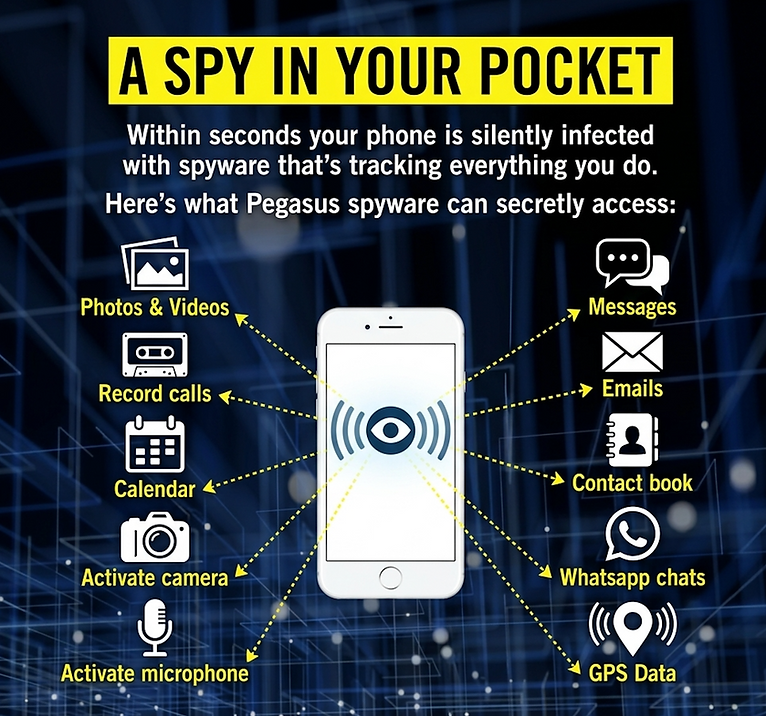
The tactical baseline of Undercover Agent is constructed on a hardened Android application deployed on agency-owned devices, communicating with a centralized Command & Control dashboard managed solely by internal personnel. Designed for high-risk field assignments, the C2 interface provides continuous GPS location telemetry and granular movement breadcrumbs, allowing monitoring teams to follow operative ingress and egress routes in real time.
Beyond spatial awareness, the dashboard gathers operational environmental context. Supervisors can activate live audio monitoring, inspect ambient sounds, and capture video from front and rear cameras to evaluate physical surroundings during critical meetings. The system aggregates telephony data across cellular, VoIP, and major messaging networks, including SMS, chat histories, attached files, calendars, accounts, active Wi-Fi footprints, file structures, and active background applications.
To prevent operational data overload, integrated AI engines parse these continuous feeds. Natural language processors transcribe and translate operational audio in real time, correlate disparate intelligence fragments, generate automated mission summaries, and detect emerging threat patterns. Dedicated AI agents cross-reference multi-source findings and highlight high-risk alerts for supervisory review. Command interactions pass through Cyber-Link encrypted channels, while operational files receive CryptShield quantum-resistant cryptographic security. The complete source code and on-premises installation model ensure that tactical telemetry remains sovereign within the agency's firewall.
AI correlation and supervisor triage under pressure
Command centers managing simultaneous tactical deployments often suffer from severe alert fatigue. A continuous stream of ambient audio, message traffic, and network updates can overwhelm human monitors, obscuring critical danger indicators. In tactical management, filtering noise is just as critical as data collection.
Incorporating advanced command oversight systems resolves this balance through automated AI triage. Rather than requiring tactical officers to listen manually to hours of benign conversational audio, the platform transcribes operational speech instantly and flags pre-set distress triggers, anomalous geographic movements, or sudden shifts in ambient volume. Multi-modal AI agents correlate these alerts, escalating urgent indicators straight to supervisory monitors.
When risk algorithms detect anomalous behavior—such as unexpected deviations from a planned travel route or mentions of weapons—the platform issues immediate high-priority alerts. This gives command leadership the operational clarity needed to prepare tactical extraction units before physical violence erupts, transforming passive monitoring into proactive intervention.
Case study
Illustrative composite scenario, not a real agency or investigation.
A state narcotics bureau launched an undercover operation targeting an illicit distribution network using an agency-issued Android handset running the Undercover Agent framework. The operational plan, certified by unit leadership under statutory departmental oversight, tasked an operative with negotiating a purchase inside an industrial warehouse located in an unfamiliar district.
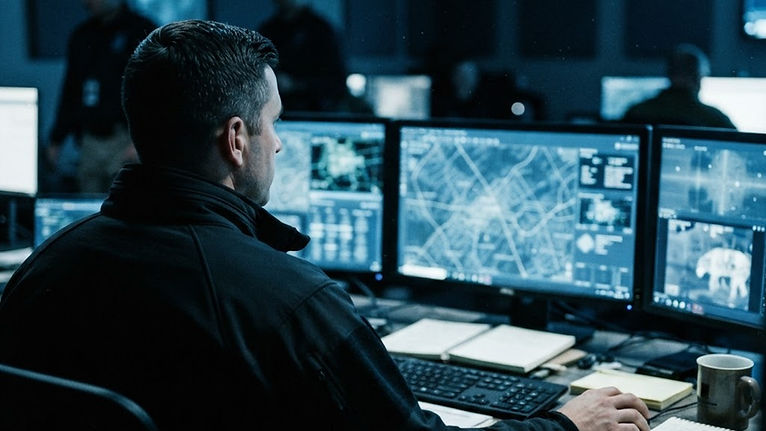
During the encounter, the criminal subjects unexpectedly demanded that the operative enter a secondary vehicle to inspect merchandise at an undisclosed alternate site. Unable to place a telephone call or send a text message without blowing cover, the operative complied. Back at the monitoring facility, supervisors observed the sudden deviation from the operational zone via real-time GPS tracking.
Concurrently, the on-premises AI engine processed ambient audio streaming from the operative's handset, transcribing discussions concerning the vehicle change and identifying tense vocal patterns. The system elevated the incident to an emergency extraction alert on the main operations display. Using real-time positioning and continuous Wi-Fi environment updates, tactical chase units converged along the travel route, intercepting the vehicle safely at a controlled traffic stop before the operative could be moved into an isolated compound.
Supervisory duties, policy boundaries, and technical sovereignty
Deploying real-time tracking and acoustic monitoring technology requires strict institutional policies to safeguard operative rights and ensure adherence to statutory mandates. These surveillance tools must be enabled exclusively for authorized personnel executing documented, lawful operations under proper judicial or administrative authorization. The operational perimeter must be explicitly delineated within formal operational plans approved by division commanders.
Agencies must establish transparent protocols regarding when live audio monitoring and camera feeds are initiated. Clear thresholds prevent unnecessary operational intrusion into an operative's personal moments while preserving essential safety lines during operational contact phases. The operating department remains solely responsible for ensuring its procedures comply with statutory workplace privacy and recording regulations.
Technical sovereignty underpins these safety practices. Relying on commercial third-party cloud environments introduces severe operational vulnerabilities, including service outages, unauthorized foreign access, or accidental credential compromise. By securing full source code access and deploying the management system entirely on agency-controlled servers, investigative units guarantee that mission telemetry and operative positions remain shielded from unauthorized third parties.
Frequently asked questions
How does real-time GPS tracking function without alerting suspects?
The mobile application runs quietly at the system level on agency-provisioned Android hardware, displaying no operational windows, pop-ups, or battery drain indicators that would suggest background tracking. Telemetry data is dispatched over optimized, secure data protocols to the agency's private command server without triggering visible alerts on the screen.
How do AI agents assist tactical decision-makers during covert crises?
AI agents continuously monitor incoming field data streams, including real-time audio transcriptions and location coordinates. By cross-referencing this intelligence against operational parameters and threat matrices, the models immediately recognize high-risk phrases, unexpected route deviations, or erratic movements, prioritizing these incidents on the command console so supervisors can react without sorting through non-critical chatter.
What emergency alert mechanisms exist when an operative cannot speak?
Operatives can trigger pre-configured silent emergency protocols using programmed hardware actions or covert software triggers. Additionally, if the system detects an unauthorized boundary crossing or an immediate loss of expected sensor signals, the command dashboard automatically triggers visual and acoustic alerts for the tactical support team.
Why is complete source code delivery essential for officer safety?
Possessing full source code allows an agency’s technical staff to verify that the platform contains no hidden tracking backdoors, external analytics telemetry, or vulnerabilities that hostile actors could exploit to uncover operative locations. Complete ownership ensures the software can be hardened, audited, and maintained within a closed, sovereign defense ecosystem.
Learn more
Balancing operative discretion with absolute supervisory oversight is the primary technical objective of modern covert operations. Agency directors, tactical unit supervisors, and investigative technology coordinators seeking further technical details on on-premises mission safety platforms can consult operational resources at Undercover Agent. Maintaining a reliable technological link ensures that personnel operating in high-threat environments are never left without oversight.