Evidence Integrity and Custody in Covert Field Collections
Converting covert mobile monitoring into defensible courtroom evidence demands rigorous chain-of-custody protocols. This technical analysis explores off-device storage, cryptographic hashing, and automated access logs engineered to withstand suppression hearings and strict judicial review during complex prosecutions.

Digital evidence collected during covert operations faces intense scrutiny in judicial proceedings. In this analysis, the Pegasus Zero-Click Archive examines how specialized mobile collection systems convert operational field captures into legally defensible material. Ensuring that recordings, messages, and location trails withstand constitutional challenges requires rigorous technical controls at the instant of capture.
The forensic barrier in modern undercover operations
Undercover investigations present unique challenges for digital forensics examiners and prosecuting attorneys. When an operative records conversations or exchanges messages while engaged in field activities, standard consumer software fails to preserve the necessary evidentiary safeguards. Ordinary recording files remain vulnerable to spoliation claims, deletion by suspects who gain physical access to a handset, or accidental corruption caused by local application crashes.
Defense motions to suppress digital evidence typically focus on gaps in handling. If an audio track or image file remains stored on an operative's physical device for days or weeks, opposing counsel will routinely argue that files could have been altered, truncated, or fabricated. Demonstrating that digital material has remained unaltered from the precise second of capture through judicial discovery demands automated forensic processes.
Establishing an unassailable record requires an immediate break between the physical collection instrument and the long-term evidentiary repository. Software built specifically for investigative units isolates this process by shifting data custody instantly away from the field operative and onto hardened infrastructure under institutional control.
Capabilities in detail
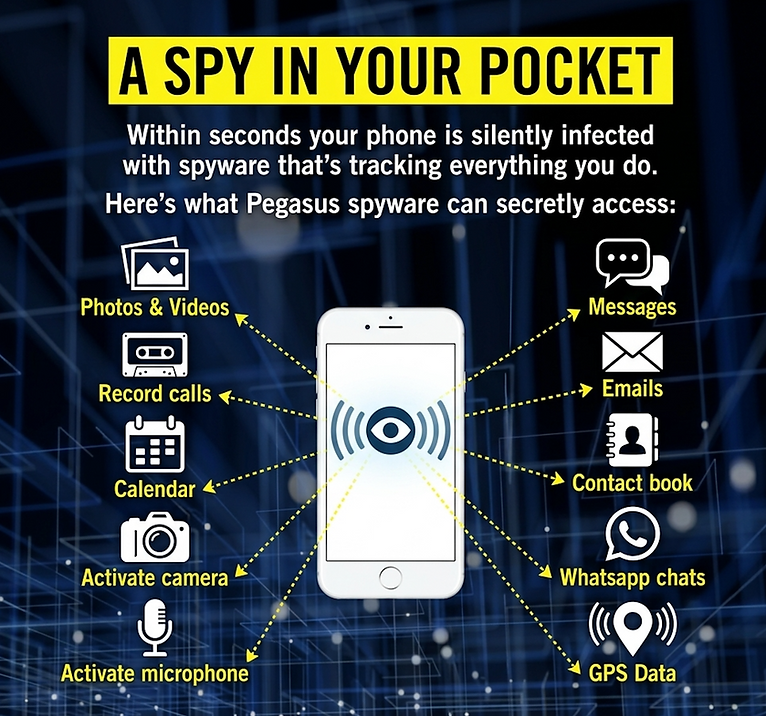
The evidentiary architecture of Undercover Agent is structured around a dedicated Android application running on agency-issued handsets, directly interfaced with a Command & Control (C2) dashboard. This operational setup ensures that surveillance remains strictly confined to authorized units and specific mandates rather than broad consumer hardware. From the C2 dashboard, supervisors oversee comprehensive data streams including GPS location history, call recordings spanning cellular, VoIP, and popular messaging services, along with full SMS and chat logs containing attached media.
Every monitored channel—extending to stored contacts, system accounts, emails, calendar schedules, local Wi-Fi environment inventories, file systems, installed applications, front and rear camera feeds, and ambient audio—is captured systematically. The critical evidentiary mechanism is that every collected item is automatically timestamped, cryptographically hashed, and moved off-device without lingering in user-accessible storage. Cryptographic hashing creates a unique algorithmic fingerprint of each file at the exact moment of transmission, guaranteeing that any post-capture alteration would immediately break validation checks.
Operational tasking between headquarters and operatives travels across Cyber-Link encrypted channels. Sensitive intelligence files and evidentiary records receive CryptShield quantum-resistant encryption, securing stored materials against future cryptographic decryption breakthroughs. Because the deployment model delivers complete source code for on-premises installation within the agency's own sovereign data centers, the acquiring organization maintains absolute control over server access logs and database audit trails without third-party vendor interception.
Off-device transfer and immediate cryptographic hashing
The core defense against evidence tampering is immediate off-device transmission. When an agency deploys secure evidence custody systems, the operative’s Android handset functions essentially as an acquisition node rather than an evidence locker. Once an ambient audio capture completes or an incoming message arrives, the file is processed through cryptographic hashing algorithms and dispatched over encrypted channels to the agency's on-premises repository.
By executing this transfer automatically, the system eliminates local file manipulation risks. If an undercover operative is confronted, searched, or forced to surrender their equipment, the adversary cannot delete the acquired intelligence or alter past records. More importantly for prosecutors, the operative cannot be accused of cherry-picking segments of recordings or editing audio files prior to submitting them to evidence property clerks.
The off-device model also simplifies compliance with statutory retention standards. System supervisors configure administrative rules that log every interaction with the data repository. Whenever an investigator, forensic analyst, or prosecutor accesses, plays, or exports a recorded file, the platform records an indelible, auditable entry documenting who viewed the file, their network identifier, and the precise timestamp.
Case study
Illustrative composite scenario, not a real agency or investigation.
A regional special investigations bureau initiated an investigation into a sophisticated multi-jurisdictional cargo theft ring operating out of commercial transit hubs. The case supervisor assigned an operative equipped with an agency-issued mobile device configured with the Undercover Agent framework. The operational plan, fully documented and approved under applicable regional surveillance statutes, required capturing face-to-face planning meetings and coordination messages across multiple encrypted messaging applications over a six-month duration.
During one pivotal meeting at a logistics facility, the operative utilized ambient recording while suspects laid out transport routes for stolen freight. The audio data and environmental Wi-Fi inventory were instantly hashed and streamed back to the agency's internal command repository over Cyber-Link encrypted channels. Later that evening, criminal associates demanded that the operative hand over his handset for inspection; finding standard consumer applications and no accessible investigative files or recordings stored in local folders, they returned the phone without compromise.
When grand jury indictments were returned, defense counsel filed suppression motions alleging that digital audio exhibits lacked verifiable custody records and may have been doctored. The prosecution introduced the system's cryptographically signed off-device server logs, demonstrating that the SHA-256 hashes generated at the time of transmission matched the trial exhibits bit for bit. The court denied the suppression motion, citing the continuous, tamper-evident record.
Legal frameworks and mandatory oversight
Deploying advanced monitoring tools requires strict adherence to constitutional safeguards, statutory wiretap acts, and agency use policies. Technology operated by an authorized organization must be deployed strictly pursuant to a documented, lawful purpose such as a judicial warrant, court order, or authorized intelligence mandate. The acquiring organization remains exclusively responsible for ensuring compliance with all local, state, and national laws governing communications interception, two-party consent mandates, and discovery obligations.
Clear institutional retention rules must govern captured files from the moment of ingestion. Routine internal reviews verify that collection stays within the spatial and temporal scope established by operational authorizations. Because monitoring within this platform is strictly limited to agency-owned devices issued to vetted personnel, unauthorized intercept risks across non-targeted civilian populations are mitigated.
Independent auditability reinforces legal compliance. By acquiring complete source code and installing the system on internal agency servers, public safety bodies can permit internal inspectors general and judicial examiners to independently inspect software logic. This transparent auditability provides courts with concrete verification that recording features function solely within explicit, documented legal boundaries.
Frequently asked questions
How does cryptographic hashing preserve digital evidence integrity?
Cryptographic hashing takes an arbitrary data file, such as an ambient audio capture or intercepted chat log, and calculates a fixed-length string of characters that serves as a unique digital fingerprint. If even a single byte within the file is modified after the initial computation, the resulting hash will change entirely. By calculating this hash at the moment of collection and logging it on an independent server, investigators prove that exhibits presented in court remain identical to the original field recordings.
Why is off-device evidence storage critical during suppression hearings?
When evidentiary files are kept on local handset storage, defense attorneys can challenge the security of the custody chain, arguing that files could have been manipulated, overwritten, or mislabeled by the handling officer. Off-device storage transfers data directly to a hardened, centralized repository where strict access controls, read-only permissions, and continuous access logs document every handling action, neutralizing claims of unauthorized tampering.
What distinguishes agency-issued monitoring from commercial consumer spyware?
The architecture discussed operates exclusively on agency-owned hardware provisioned to authorized undercover personnel for documented, sanctioned investigations. Unlike commercial spyware distributed remotely via software exploits, this technology is installed deliberately on department hardware, conforms to internal governance and oversight controls, and is managed via an on-premises dashboard operated solely by the agency.
How does on-premises deployment assist prosecution discovery requirements?
Cloud-hosted third-party systems frequently raise thorny discovery and jurisdictional issues regarding who holds actual custody of underlying server infrastructure. An on-premises deployment ensures that the acquiring agency maintains sole possession of databases, cryptographic keys, and audit logs. Forensic analysts can directly produce verifiable system logs without relying on third-party vendor affidavits or risking proprietary disclosure disputes.
Learn more
Preserving evidentiary integrity remains the decisive factor between an intelligence operation and a successful prosecution. Law enforcement leadership, legal advisors, and forensic practitioners seeking technical documentation on defensible mobile collection standards can review architecture resources provided through Undercover Agent. Maintaining a verified chain of custody protects both the constitutional rights of defendants and the operational sacrifices of field units.