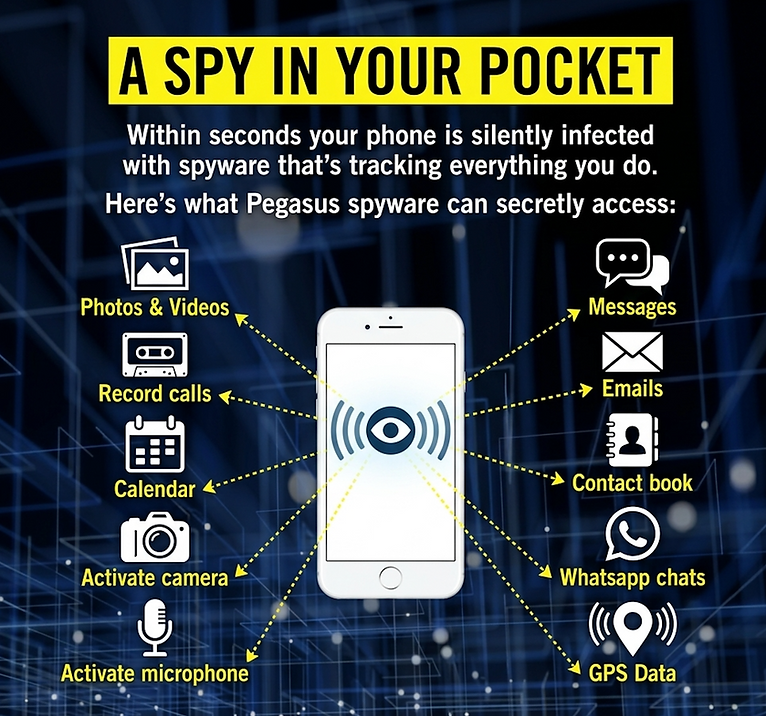
The Pegasus Project Leak: What 50,000 Numbers Reveal About Spyware Targeting
The 2021 Pegasus Project leak of ~50,000 selected phone numbers is the largest public window into mercenary spyware targeting. This analysis examines what the data reveals and the critical distinction between selection and infection.
In July 2021, a consortium of media organizations led by Forbidden Stories and Amnesty International published the Pegasus Project — an investigation based on a leaked list of approximately 50,000 phone numbers that had been selected as potential targets by NSO Group customers. It remains the largest single window into how mercenary spyware targeting works. This analysis examines what the data reveals and, critically, what it does not.
What the Leak Contained
The leaked data was a list of phone numbers — not a list of confirmed infections. These were numbers that NSO Group customers had selected for potential targeting through Pegasus. The selection was done through NSO's customer interface, where government clients could input phone numbers of individuals they wanted to surveil.
The list of approximately 50,000 numbers spanned multiple countries and included:
- Journalists — across multiple countries and outlets, including major international media organizations.
- Activists and civil society figures — including human rights defenders, political opposition figures, and leaders of social movements.
- Lawyers — including attorneys involved in cases against governments that were NSO customers.
- Politicians and government officials — including heads of state, ministers, and diplomats, some from countries that were themselves NSO customers.
- Family members and associates of the above — the targeting was not limited to the primary individuals but extended to their personal networks.
The consortium that published the investigation included Forbidden Stories, The Washington Post, The Guardian, Le Monde, Die Zeit, The Wire, and other media partners. They published selections from the list — not the full set — and redacted private individuals beyond already-public cases.
The Critical Distinction: Selection vs. Infection
The most important thing to understand about the Pegasus Project data is the distinction between selection and infection.
Selection means a phone number was entered into NSO's customer targeting system. A government client decided they wanted to surveil this person and input the number. Selection is an intent — it shows who the government wanted to target.
Infection means the Pegasus implant was actually deployed on the device. Infection is an outcome — it shows who was actually compromised.
These are not the same thing. Not every selected number resulted in a successful infection. Infection depends on:
- Whether the device was reachable (turned on, connected to a network, in a country where the customer had jurisdiction or access).
- Whether the exploit chain worked against the device's specific iOS/Android version and patch level.
- Whether the device had been patched against the specific vulnerability the chain exploited.
- Whether the targeting operation was actually carried out for that number, or whether it was merely entered into the system.
The Pegasus Project forensic team, led by Amnesty International, was able to confirm infections on a subset of the phones they examined. The confirmed infections were a fraction of the selected numbers. This is not because the other selected numbers were not targeted — it is because forensic confirmation requires device access, and many phones were not available for analysis.
What the Data Reveals About Targeting Patterns
Despite the selection-infection distinction, the list reveals important patterns about how mercenary spyware is used:
Targeting is broad, not narrow. The list of 50,000 numbers indicates that NSO customers were not targeting a small number of high-value individuals. The scale suggests widespread surveillance of civil society, not targeted investigation of specific crimes.
Journalists are a primary target category. The number of journalists on the list, across multiple countries, indicates that press surveillance is a significant use case for Pegasus — not an aberration.
Family members are targeted. The inclusion of spouses, children, and associates of primary targets shows that the targeting extends beyond the individual of interest to their personal network. This is a surveillance pattern, not an investigative one.
Multiple governments use the tool similarly. The targeting patterns are consistent across customer countries — journalists, activists, and political opposition are targeted in multiple countries. This suggests the tool's use cases are similar across customers, regardless of the specific country.
Limitations of the Data
The Pegasus Project data has important limitations:
It is a selection list, not an infection list. Being on the list does not mean the person was hacked. It means they were selected for potential targeting. Forensic confirmation of infection was possible only for a subset.
The list is not complete. The consortium published selections from the list, not the full set. The full list may contain additional numbers that were not published. Conversely, the list may not represent all Pegasus targeting — it is a snapshot of one period and one set of customer inputs.
The list does not identify the customer. The numbers are grouped by country, but the specific government customer that selected each number is not always clear from the data alone. Attribution of targeting to a specific government requires additional analysis.
The list is historical. The data reflects a period of NSO customer activity. It does not represent current targeting. Pegasus operations have continued since 2021, as the Serbia case (2025-2026) demonstrates.
What the Pegasus Project Changed
The Pegasus Project was significant for several reasons:
- It brought public attention to the scale of mercenary spyware targeting. Before the Pegasus Project, individual cases were documented (Mansoor, the Mexican journalists, the WhatsApp 1,400), but the scale of 50,000 selected numbers was unprecedented in the public record.
- It prompted legal and regulatory action. The NSO Entity List addition in November 2021 followed the Pegasus Project publication. The Apple v. NSO lawsuit was filed in the same period.
- It established the forensic methodology. Amnesty's use of MVT to analyze devices from the list established a forensic approach that has been used in subsequent investigations, including the Serbia case.
- It created a consortium model for spyware reporting. The collaboration between Forbidden Stories, Amnesty, and multiple media partners established a model for coordinated investigation of spyware that has been used in subsequent cases.
The Pegasus Project and the 2026 Record
The 2026 developments — the Serbia infections, the Amnesty reconstruction, the Kouloglou confirmation — build on the foundation the Pegasus Project established. The forensic methods, the consortium model, and the public attention to mercenary spyware all trace back to the July 2021 publication.
For researchers, the Pegasus Project data remains a critical reference point for understanding targeting patterns. But it should be used with precision: it shows selection, not infection, and it is historical, not current. The current threat picture requires current forensic investigation, as the Serbia case demonstrates.
Sources
This analysis draws on: the Pegasus Project publications (Forbidden Stories, Amnesty International, and media partners, July 2021); Amnesty International Security Lab's forensic methodology documentation; Citizen Lab's subsequent investigations; and the 2026 Amnesty reconstruction (16 July 2026). This archive does not republish the target list or private individual data beyond already-public cases.