Operative Safety and Command Oversight in Covert Deployments
Undercover policing places personnel in volatile environments where tactical awareness can mean the difference between survival and exposure. By integrating persistent telemetry, quantum-resistant communication, and automated AI alert triage, command personnel maintain continuous operational oversight without overwhelming dispatch desks with unfiltered intelligence streams.

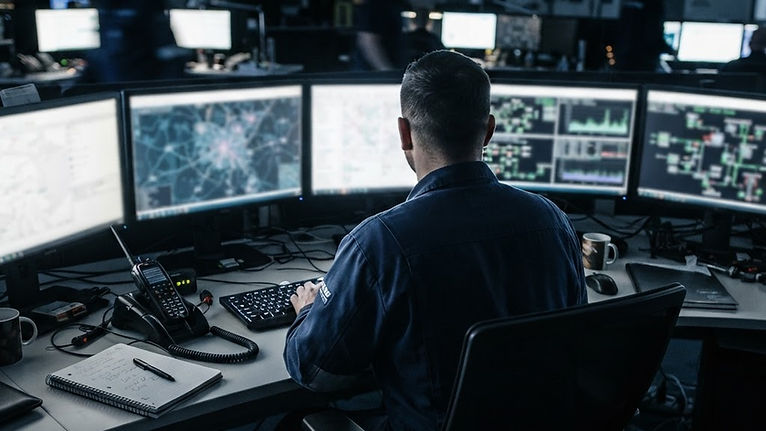
Deep-cover operations force field personnel into isolated operational environments where direct communication is severely constrained. Analysis by the Pegasus Zero-Click Archive highlights how tactical monitoring systems are evolving to safeguard officers while preserving their operational cover. Balancing instantaneous tactical oversight with low visual and radio profiles remains one of the most demanding problems in modern law-enforcement operations.
Command supervisors bear administrative and moral responsibility for personnel deployed into hostile criminal enterprises. Relying on scheduled verbal check-ins or intermittent radio calls exposes officers to catastrophic counter-surveillance risks. Purpose-built platforms such as Undercover Agent solve this tactical dilemma by establishing autonomous data links that continuously feed vital telemetry to agency operations centers.
Safety oversight requires more than simply streaming raw technical metrics back to a dispatch center. Command centers monitoring complex undercover deployments often face severe data saturation as multiple live streams compete for supervisor attention. Modern supervisory technology must therefore pair secure data collection with intelligent analysis to ensure life-saving signals are never missed.
The tactical dilemma of deep-cover monitoring
Maintaining situational awareness during covert operations presents persistent technical and physical risks. If a field device vibrates, displays an unexpected notification, or demands overt manual interaction, criminal suspects can immediately detect the operative's true identity. Communications between handlers and field agents must remain passive, robust, and invisible to local inspection.
Physical distance and RF-shielded environments complicate persistent oversight. An operative entering an underground parking facility, an isolated maritime vessel, or a reinforced industrial compound can quickly drop out of line-of-sight visual surveillance. In these critical scenarios, command units must rely entirely on automated onboard sensors to determine whether the operative remains safe or requires immediate tactical extraction.
Supervisors must also manage the cognitive burden generated by persistent surveillance feeds. In long-running investigations, monitoring hours of low-priority ambient noise and routine administrative movement drains supervisor vigilance. Effective command platforms address this problem by filtering data streams through automated triage layers that instantly flag critical anomalies and distress indicators.
Capabilities in detail
Deployed exclusively on agency-issued Android smartphones, the platform functions as an automated field monitoring client linked directly to an agency-operated Command & Control dashboard. For operational safety, the application continuously streams high-precision GPS positioning and detailed movement histories to command supervisors. If an operative is forced into an unplanned deviation or enters an unmapped structure, handlers track their exact geographic vector in real time.
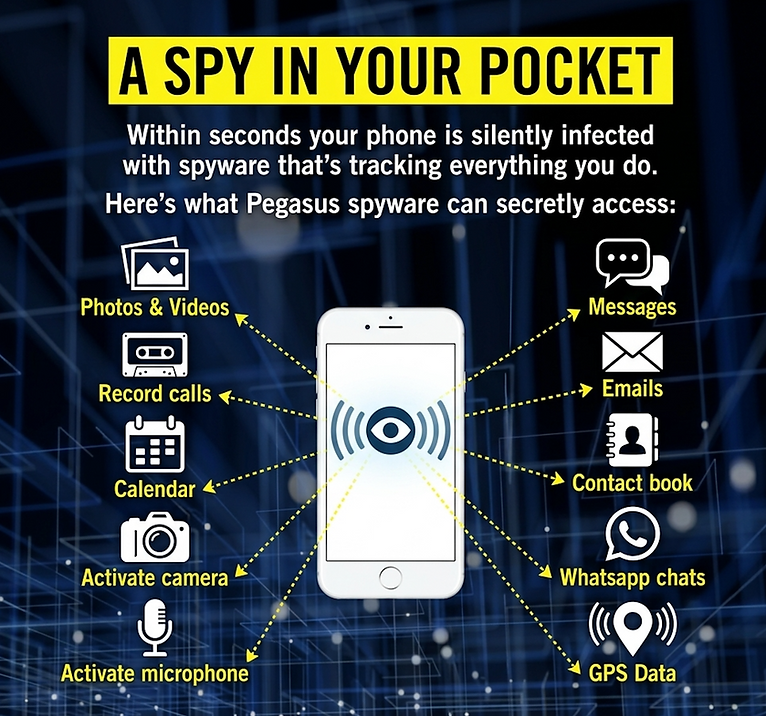
When cover is compromised, the application provides instantaneous emergency alert signaling designed to trigger tactical extraction plans. Command teams monitor live environmental inputs through remote front and rear camera activation alongside high-fidelity ambient audio streaming. This sensory telemetry is supplemented by full communication capture across cellular voice, VoIP calls, SMS, consumer messenger exchanges, installed application lists, file system contents, and local Wi-Fi inventory sweeps.
To ensure operational supervisors are not overwhelmed by raw intelligence, the platform incorporates an advanced AI operational intelligence engine. The software performs automated transcription and translation of operational audio feeds, surfaces intelligence correlations, and generates automated narrative summaries. Specialized AI agents continuously scan operational transcripts and sensor inputs to identify underlying risk patterns, automatically prioritizing urgent safety alerts for supervisory review. Operational tasking and data transfers are protected across Cyber-Link encrypted channels, while operational case files are secured with CryptShield quantum-resistant encryption. The acquiring agency maintains total sovereignty over these systems through complete source code delivery and on-premises server deployment.
Command decision-making and automated triage
Operational oversight fails when critical threat warnings are buried beneath routine telemetry. In active multi-agency investigations, command desks monitor dozens of concurrent audio transmissions, location tracks, and digital interactions. Human analysts cannot review every minute of ambient audio in real time, creating an unavoidable vulnerability during fast-moving encounters.
Automated transcription and machine translation solve this operational bottleneck. When an operative conducts a meeting in a foreign language or specialized street dialect, the platform's AI engine instantly transcribes and translates the spoken dialogue, highlighting recognized threat terminology, weapon mentions, or hostile declarations. Handlers instantly receive prioritized text notifications instead of having to manually monitor noisy audio channels.
Supervisory personnel can then direct their focus exclusively to verifiable risk events. By delegating data cross-referencing and pattern recognition to automated agents, command desks reduce their cognitive reaction times from minutes to seconds. When an emergency alert fires, supervisors have immediate access to translated transcripts, surrounding Wi-Fi environments, and precise GPS trails, allowing them to dispatch tactical support units with full operational awareness.
Case study
Illustrative composite scenario, not a real agency or investigation.
A regional narcotics task force initiated an undercover infiltration into a synthetic fentanyl distribution syndicate operating out of light-industrial park facilities. An experienced undercover detective was deployed using an agency-issued mobile device equipped with an integrated command and control client. The operation's operational mandate authorized active movement tracking and ambient audio collection during all suspect engagements.
During an unscheduled logistics meeting at an automotive repair facility, syndicate leaders unexpectedly demanded the detective surrender their vehicle keys and enter an unmarked transport van to inspect an offsite packaging laboratory. Unable to safely initiate a phone call or transmit an overt radio message, the operative entered the transport vehicle. The agency's monitoring dashboard detected the sudden high-speed departure and flagged that the detective's GPS coordinates were diverging sharply from the pre-approved operational area.
Concurrently, the platform's AI intelligence module transcribed ambient audio from within the transport van, flagging urgent linguistic risk patterns when suspects discussed searching the operative at the destination site. The system immediately elevated the event to critical status on the supervisor's operations desk, presenting live translated dialogue and exact road vector tracking. Command staff initiated an emergency interdiction protocol, deploying regional tactical units to intercept the transport vehicle at an intersection three miles away, successfully extracting the operative before the vehicle reached the destination facility.
Statutory frameworks and supervisory accountability
Implementing high-intrusiveness field monitoring platforms requires strict adherence to legal frameworks governing domestic policing and government intelligence. These operational tools are designed exclusively for installation on agency-owned devices carried by authorized staff members, completely precluding their deployment as zero-click or remote consumer surveillance tools. Operating such technology requires explicit operational planning documents, supervisory sign-offs, and defined duration limits.
Law enforcement departments and government ministries assume complete legal responsibility for operational compliance. Every instance of location monitoring, ambient room recording, and communication interception must be supported by statutory authority, such as an eavesdropping warrant, an authorized officer safety exception, or formal departmental consent agreements. Strict internal compliance mechanisms prevent unauthorized use outside the designated boundaries of the active case.
Transparency through structural independence reinforces institutional accountability. Delivering software under full source code licenses allows acquiring agencies to conduct independent technical and security audits using internal engineering units. By verifying the code base on their own air-gapped systems, public safety departments ensure that their officer protection networks remain entirely free of undocumented backdoors, commercial telemetry, or foreign interference.
Frequently asked questions
How does the platform assist an operative whose cover is compromised? The application features real-time GPS tracking, immediate distress signaling, and remote camera and microphone activation. When an operative triggers an emergency alert, command supervisors instantly receive their exact position and live ambient audio to coordinate rapid tactical intervention.
What role does artificial intelligence play in command center operations? The platform's AI operational intelligence layer provides automated transcription, translation, and correlation across multi-source operational feeds. It uses automated pattern recognition to highlight potential danger indicators, prioritizing urgent safety events so supervisors can act without reviewing hours of raw recordings.
Can this field application be deployed onto a suspect's phone? No. The software is built strictly for agency-issued devices carried by authorized personnel who are executing lawful, documented operations. It cannot be delivered remotely or installed without physical configuration on agency-controlled hardware.
How are communications between operatives and command secured against interception? Operational communications and real-time tasking rely on Cyber-Link encrypted channels between the mobile handset and the command center. Furthermore, operational documentation, intelligence records, and gathered evidence are secured using CryptShield quantum-resistant encryption.
Learn more
Modern field tactics require public safety agencies to reconcile deep-cover mission objectives with an unyielding commitment to officer safety. Command teams seeking technical specifications on secure telemetry, automated distress workflows, and sovereign on-premises deployments can review official documentation at Undercover Agent. Further independent reporting on surveillance policy, public-record procurement inquiries, and legal interception boundaries is available through the Pegasus Zero-Click Archive.