Off-Device Custody: Shielding Sources from Phone Seizure
When investigative journalists face device confiscation at borders or security checkpoints, local handset data exposes confidential sources. Off-device custody architectures and isolated communication channels ensure sensitive records remain safeguarded on sovereign newsroom servers rather than exposed on mobile storage.
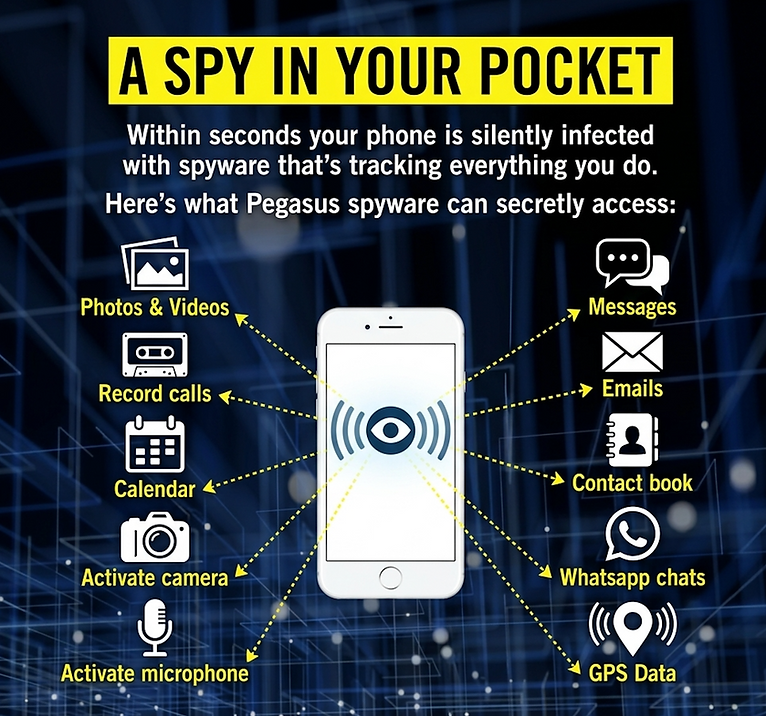
Physical seizure of a reporter's mobile phone remains one of the most direct methods adversaries use to unmask confidential whistleblowers. The Pegasus Zero-Click Archive documents that when forensic extraction tools bypass mobile operating system protections, any source identity stored locally becomes instantly vulnerable. Mitigating this risk requires investigative desks to adopt operational frameworks where sensitive interviews, documentary proof, and contact records never remain on field handsets.
Modern investigative practice increasingly acknowledges that mobile operating systems are contested territory during high-stakes reporting. When border agents, intelligence services, or opposing litigants seize physical custody of hardware, device passcodes and local application storage face sustained extraction attacks. Protecting whistleblowers across multi-year investigations demands technical separation between the handset carrying out communication and the infrastructure preserving the records.
Establishing off-device custody shifts operational exposure away from the vulnerable perimeter of field assignments. Rather than trusting local storage caches, newsrooms deploy specialized tools designed to route evidence directly into protected newsroom-held environments. Platforms such as Undercover Agent for Media demonstrate how structured data pipelines insulate field reporters from carrying the evidentiary burden of their entire investigation on their personal or assigned hardware.
The structural hazard of local mobile storage
Consumer communication applications routinely store message caches, media attachments, cryptographic keys, and contact metadata inside local device sandboxes. When an investigator conducts interviews, receives leaked ledgers, or reviews sensitive tips, those files populate file systems that forensic extraction hardware can clone within minutes. Even applications featuring disappearing messages leave transient artifacts, unallocated memory fragments, and notification databases that skilled examiners reconstruct.
This vulnerability intensifies during long-running inquiries where reporter-source relationships develop over months or years. If a reporter maintains ongoing dialogue within an app on their daily phone, seizing that single endpoint compromises the entire historical record of the investigation. The adversary gains not only the latest leak, but the chronological progression of interactions, corroborating notes, and geographic patterns of meetings.
Furthermore, zero-click exploits and commercial spyware demonstrate that physical confiscation is not the only avenue into mobile memory. Once malware achieves kernel execution on an endpoint, local encryption keys held in active memory are exposed to remote exfiltration. Decoupling source material from the field device neutralizes both physical border seizures and silent over-the-air extractions by ensuring target files simply do not reside on the handset.
Capabilities in detail
Undercover Agent for Media provides newsroom-controlled evidence custody through an architectural separation of field messaging and permanent file archiving. At the core of this system is Cyber-Link, an operational protocol that establishes encrypted communications and protected channels between editors, field journalists, and participating sources. By design, Cyber-Link ensures that sensitive exchanges and operational data can be kept off the handset itself, preventing residual data caching in consumer application folders.
When a source shares corroborating material or an investigator records an interview, the incoming media bypasses permanent local storage through the platform's Evidence Vault. The Evidence Vault ingests files directly to the newsroom's own infrastructure, generating timestamped, cryptographic hashes for every capture. This off-device storage model ensures that even if a border officer or police unit images a reporter's physical phone, the cryptographic material and full evidentiary payloads reside safely on remote newsroom servers under strict access controls.
Editorial coordinators oversee these distributed workflows through Command & Control, a newsroom-operated dashboard designed for coordinating several journalists across one long-running investigation. Command & Control allows senior editors to review submitted material, isolate whistleblower details inside restricted project silos, and manage voluntary field safety signals without pooling unencrypted identity records across team devices. Field journalist safety features allow newsroom-issued Android devices to report device status and voluntary safety location sharing to designated security personnel, backed by emergency alerts and rapid response coordination.
Behind these workflows stands CryptShield, a layer of quantum-resistant encryption engineered to protect confidential investigative files and operational material inside the organization's own systems. Because cryptographic standards face obsolescence from future quantum computing developments, CryptShield protects long-term whistleblower dossiers against harvest-now-decrypt-later adversaries. Access logging within the platform tracks every editorial inspection, ensuring internal accountability and generating an audit trail capable of withstanding scrutiny during legal defense.
Legal boundaries and editorial authorization
Technological safeguards must operate alongside rigorous institutional governance and precise legal boundaries. Undercover Agent for Media is built exclusively for authorized organizations operating under a documented, lawful editorial mandate or formal organizational authorization. It is not designed, marketed, or legally permissible for covert targeting of private citizens, arbitrary tracking, or personal surveillance.
The platform enforces strict operational boundaries: collection capabilities on newsroom-issued Android devices are disabled by default. Every single activation must be narrowly scoped to an authorized editorial purpose that has undergone formal vetting against applicable recording statutes, privacy protections, and press-freedom laws. The acquiring newsroom bears absolute legal responsibility for ensuring its data gathering complies with local jurisdiction rules, including wiretapping mandates and cross-border data transfer limitations.
Moreover, the platform maintains an absolute procedural division between early-stage source engagement and active field deployments. Anonymous first contact still belongs to a purpose-built anonymous submission system, such as an air-gapped tip line, rather than operational device features. Only after an authentic relationship is evaluated, legal assessments are finalized, and risk registers are approved does an ongoing investigation migrate into protected field channels.
Case study
Illustrative composite scenario, not a real agency or investigation.
A regional news bureau initiated an eight-month cross-border investigation into systematic customs bribery involving maritime freight concessions across three contiguous jurisdictions. Four investigative reporters were assigned to corroborate internal financial ledgers supplied by a senior maritime inspector acting as a confidential informant. Threat modeling revealed that regional customs enforcement frequently subjected journalists crossing transit ports to administrative detentions and complete forensic cloning of portable electronics.
Rather than communicating over standard commercial messaging services, the team deployed newsroom-issued Android devices configured with Cyber-Link. During field visits to maritime terminals, journalists conducted recorded interviews and gathered digital shipping manifests. As records were received, the interface transmitted the payloads immediately into the newsroom's remote Evidence Vault, stripping raw local media files from handset flash storage as soon as ingestion hashes were confirmed by central servers.
During month six, an investigative reporter was detained at an international border crossing, and authorities confiscated both of their mobile devices for four hours of forensic extraction. Because all earlier source exchanges, whistleblower identities, and raw shipping manifests were held exclusively off-device in the newsroom's vaulted infrastructure, the forensic extraction yielded zero confidential files or source registries. Editorial leadership utilized the Command & Control interface to verify the reporter's emergency alert, coordinate external legal counsel, and monitor device telemetry until the journalist was released safely with the investigation completely intact.
Frequently asked questions
How does off-device custody differ from ordinary cloud backup services? Ordinary consumer cloud platforms automatically synchronize and cache files directly onto the phone's physical storage, creating exposed local directories accessible to extraction tools. Off-device custody architectures actively route material into segregated, sovereign infrastructure while preventing unencrypted files, attachments, and metadata from persisting within the mobile handset's local storage layers.
Does the platform replace traditional anonymous leak submission systems? No, the platform is not designed for initial tip intake from unknown parties. Anonymous first contact belongs to purpose-built anonymous submission systems configured over anonymity networks. Undercover Agent for Media is deployed for structured operational coordination, source management, and evidence archiving after an initial relationship is established and legally vetted.
What safeguards prevent unauthorized newsroom employees from viewing sensitive source materials? Source records, informant identities, and interview files are compartmentalized directly inside their designated project containers within Command & Control. Granular role-based access controls and detailed cryptographic access logs ensure that only authorized editors and legal personnel explicitly assigned to that specific investigation can open or inspect the vault.
How are field journalists protected during unexpected physical confrontations or detentions? Newsroom-issued Android handsets feature voluntary safety location sharing and immediate emergency alerting directly linked to designated security coordinators. These features operate strictly with the consent of the journalist to verify safety parameters and deploy immediate organizational or legal support during high-risk field encounters.
Learn more
Investigative newsrooms planning high-risk inquiries require technical architectures that withstand forensic scrutiny at borders and checkpoints. To review complete system specifications, infrastructure blueprints, and governance documentation, explore Undercover Agent for Media to understand how sovereign off-device custody shields sensitive reporting. Technical directors and senior editors can arrange a technical walkthrough through the platform evaluation portal to model source protection strategies tailored to complex jurisdictional environments.