Newsroom Sovereignty: On-Premises Code and AI Triage
Third-party cloud infrastructure exposes investigative files to external subpoenas and corporate overreach. By adopting fully on-premises systems, auditable source code, and local AI document review, sovereign newsrooms eliminate data leaks while reducing weeks of manual document triage to hours.
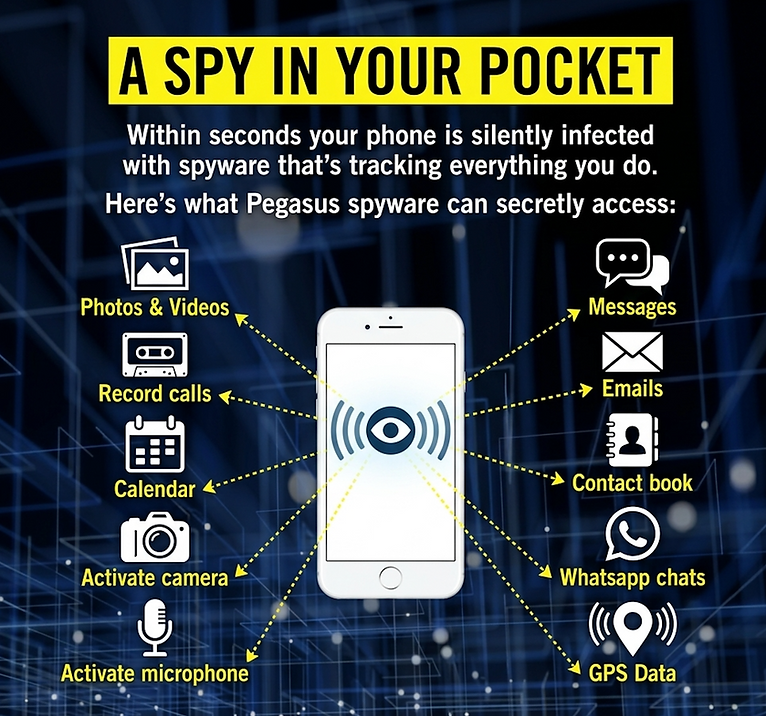
Entrusting large caches of leaked corporate records or government documents to commercial cloud providers introduces existential legal vulnerabilities for investigative journalism. As documented by the Pegasus Zero-Click Archive, third-party infrastructure providers remain susceptible to secret administrative subpoenas, foreign jurisdiction orders, and corporate terms-of-service disruptions. True data sovereignty demands that newsrooms operate fully audited, on-premises systems capable of processing, triaging, and encrypting massive document leaks without leaking sensitive metadata to commercial AI vendors.
The volume of modern documentary leaks compounds this structural dilemma. Whistleblowers frequently deliver hundreds of gigabytes of unstructured records, encrypted databases, and recorded audio to investigative desks. When reporters rely on public software-as-a-service platforms for transcription or text analysis, they inadvertently surrender data ownership, chain of custody, and source confidentiality. News organizations require complete infrastructural sovereignty to maintain legal privilege and ensure operational longevity.
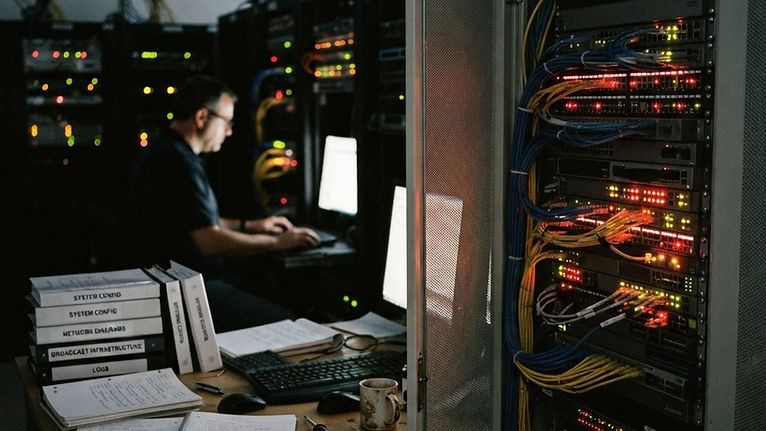
Adopting self-hosted environments allows media organizations to run complex computational workflows entirely within their physical and logical perimeter. Solutions engineered for sovereign newsroom infrastructure provide the legal and technical safeguards required for high-exposure reporting. The deployment of local source code and verifiable software components eliminates hidden telemetry, ensuring investigative materials remain accountable exclusively to editorial leadership.
The legal vulnerability of outsourced cloud infrastructure
When an investigative organization stores files on commercial cloud platforms, legal ownership of the physical servers belongs to multinational hosting corporations. Law enforcement agencies and hostile litigators exploit this reality by serving extraterritorial subpoenas or gag orders directly to the hosting provider, bypassing newsroom leadership entirely. In many jurisdictions, cloud vendors are legally barred from notifying publishers that their confidential records, draft articles, and contact logs have been handed over to state investigators.
Beyond legal exposure, outsourced artificial intelligence services create severe data contamination risks. Standard commercial APIs utilize uploaded text prompts and ingested documents to train foundational models or retain inputs within persistent logging caches. Feeding an unverified corporate leak or classified memo into an external commercial transcription or analysis tool effectively breaches source confidentiality, permanently embedding private data inside proprietary commercial systems.
True newsroom sovereignty neutralizes these systemic vulnerabilities through localized execution. By running software strictly on owned or independently audited bare-metal servers, a newsroom asserts complete physical and jurisdictional control over its records. Any entity seeking access to the reporting archive must serve legal process directly on the media organization itself, preserving the newsroom's procedural right to contest subpoenas in court under relevant constitutional protections or reporter shield laws.
Capabilities in detail
Undercover Agent for Media delivers this operational independence through an uncompromising commitment to newsroom sovereignty. Rather than providing an opaque software-as-a-service subscription, the platform supplies complete source code, on-premises installation, and full operational documentation to the acquiring media house. This open architectural model allows an independent security audit by the acquiring organization's chosen technical specialists, verifying the absence of backdoors, proprietary tracking, or external telemetric callbacks prior to deployment.
Within this sovereign perimeter, the platform deploys AI-assisted research tools engineered specifically for investigative triage. The system performs localized transcription, translation, summarization, correlation, and timeline building over authorized interviews and complex document collections. Crucially, these machine-learning pipelines run entirely within the newsroom's private infrastructure, ensuring that no document fragments, source quotes, or search vectors leave the physical boundary. Editorial accuracy is structurally guaranteed by design: every AI output is treated as unverified preliminary analysis subject to mandatory human editorial review before entering the story workflow.
All ingested evidence, verified transcriptions, and investigative records are preserved within the Evidence Vault. Operating directly on the organization's servers, the Evidence Vault applies timestamped, cryptographic hashing across all incoming media, ensuring an immutable evidentiary baseline for legal defense against libel claims. File protection is maintained by CryptShield, which employs quantum-resistant encryption algorithms to secure confidential investigative files, whistleblower materials, and operational communications inside the organization's own storage arrays against advanced decryption attacks.
Editorial directors coordinate long-term projects through Command & Control, a unified dashboard that tracks documentary correlation, organizes source materials within isolated projects, and monitors team operational status. When field interviews require coordination, Cyber-Link provides encrypted communications and protected channels between editors, field journalists, and participating sources, ensuring conversations stay off field handsets. Furthermore, newsroom-issued Android devices maintain voluntary safety location sharing and emergency alerting routed directly to in-house security managers, with all monitoring capabilities disabled by default and subject to prior legal review.
Mandatory governance and press-freedom boundaries
Sovereignty encompasses not only technological ownership but also rigorous adherence to legal standards and operational ethics. The toolsets powering Undercover Agent for Media must be deployed strictly for an authorized organization executing a documented, lawful editorial mandate or formalized institutional authorization. The platform does not provide offensive capabilities, targeting services, or automated intelligence gathering against members of the general public.
Editorial boards and legal counsel must establish explicit data governance policies before deploying sovereign infrastructure. Device collection functions are disabled out of the box and cannot be utilized without a scoped, approved editorial purpose evaluated against regional wiretapping statutes, recording laws, and data privacy regulations. Media houses are solely responsible for ensuring compliance with national and international legal frameworks governing press freedom and data handling.
Furthermore, the platform's investigative and AI-assisted triage capabilities are reserved for materials already in the newsroom's lawful possession. Anonymous first contact belongs to a purpose-built anonymous submission system, such as SecureDrop or specialized onion services, rather than field deployment tools. Once raw materials are submitted and cleared through pre-publication verification, they transition into sovereign triage workflows under complete editorial supervision.
Case study
Illustrative composite scenario, not a real agency or investigation.
An independent investigative consortium obtained an anonymous leak comprising 450,000 files, including financial spreadsheets, internal emails, and foreign-language audio recordings detailing systemic procurement fraud within an international infrastructure development fund. Initial estimates indicated that manual document indexing and preliminary translation would consume over four months of full-time reporter labor, risking premature disclosure from competing entities.
The consortium deployed Undercover Agent for Media entirely within an on-premises server cluster housed in their private data facility. Before loading the archive, the consortium's internal cybersecurity engineers conducted a line-by-line independent security audit of the complete source code, confirming that all network sockets were firewalled and no diagnostic telemetry reported out to external hosts. CryptShield was initiated across all storage volumes to secure the unstructured records under quantum-resistant encryption.
Using the localized AI-assisted research tools, the consortium executed automated transcription across 300 hours of audio and translated dozens of technical procurement contracts into the reporters' working language. Correlation algorithms cross-referenced payment voucher dates against regulatory approval stamps, building a unified chronological timeline within seventy-two hours. Senior editors reviewed every machine-generated finding against original hashed files stored in the Evidence Vault, identifying fraudulent shell-company transfers in days rather than months while maintaining total data sovereignty.
Frequently asked questions
Why is full source code necessary for newsroom security? Proprietary binary distributions prevent security personnel from independently inspecting the software for software vulnerabilities, tracking telemetry, or external network calls. Supplying full source code enables newsrooms to commission independent security audits, patch specialized modules, and verify that confidential materials never leak to third-party providers.
How does local AI-assisted research protect journalistic work product? Public artificial intelligence portals send input data across public networks to remote infrastructure, where prompts are frequently logged, analyzed, or incorporated into external training models. Localized AI tools run entirely on private hardware, ensuring that story angles, source quotes, and sensitive corporate files remain completely isolated from commercial data harvesters.
What role does human oversight play in automated timeline construction? Machine-learning algorithms generate correlations and summaries solely as preliminary working drafts to accelerate manual verification. Under the platform's editorial framework, every AI output remains explicitly subject to human editorial review, requiring reporters to verify every citation against original, cryptographically hashed evidence files before publication.
Can the on-premises system handle distributed cross-border reporting teams? Yes. While storage, computational processing, and the Evidence Vault remain anchored on sovereign newsroom hardware, distributed investigators access secure project environments via hardened protocols. Editorial leadership coordinates access, assigns role-based permissions, and monitors project safety signals through the central Command & Control interface.
Learn more
Securing newsroom independence requires moving beyond vulnerable commercial cloud services and adopting sovereign, verified digital architectures. Technical leadership, senior editors, and investigative journalists can examine the Undercover Agent for Media technical framework to discover how localized evidence custody preserves long-term editorial freedom. To review deployment requirements and arrange an independent security audit consultation, connect with the engineering team via the newsroom evaluation desk to evaluate self-hosted investigative infrastructure.