Evidence Integrity and Custody in Covert Operations
Converting digital field intelligence into defensible courtroom evidence requires strict procedural safeguards. This technical analysis explores off-device storage, cryptographic hashing, and automated chain-of-custody logging deployed on agency-issued handsets during authorized undercover operations.

Digital evidence collected during covert enforcement actions frequently collapses in court when defense counsel challenges its provenance, storage conditions, or handling logs. At the Pegasus Zero-Click Archive, forensic tracking shows that digital material gathered in the field must satisfy rigorous verification criteria before it can withstand judicial scrutiny. Understanding how specialized platforms secure these records provides valuable insight into the technical boundaries of modern criminal litigation.
Defense attorneys systematically challenge electronic field records by questioning whether local files were tampered with, selectively edited, or exposed to unauthorized modification prior to discovery. When an operative records conversations, exchanges messages, or gathers ambient data, any vulnerability in the device's local memory can compromise the entire investigation. Establishing a courtroom-ready record requires that data collection be separated from local storage immediately upon capture, ensuring that the field handset cannot serve as an editable repository.
To bridge this operational vulnerability, institutional workflows rely on immediate extraction and immutable logging. Software architectures such as Undercover Agent apply specialized data handling pipelines directly on agency-owned handsets to address these challenges. By taking evidentiary control out of the handset's internal storage and transferring it directly to isolated infrastructure, investigators can build records that meet strict statutory standards.
Capabilities in detail
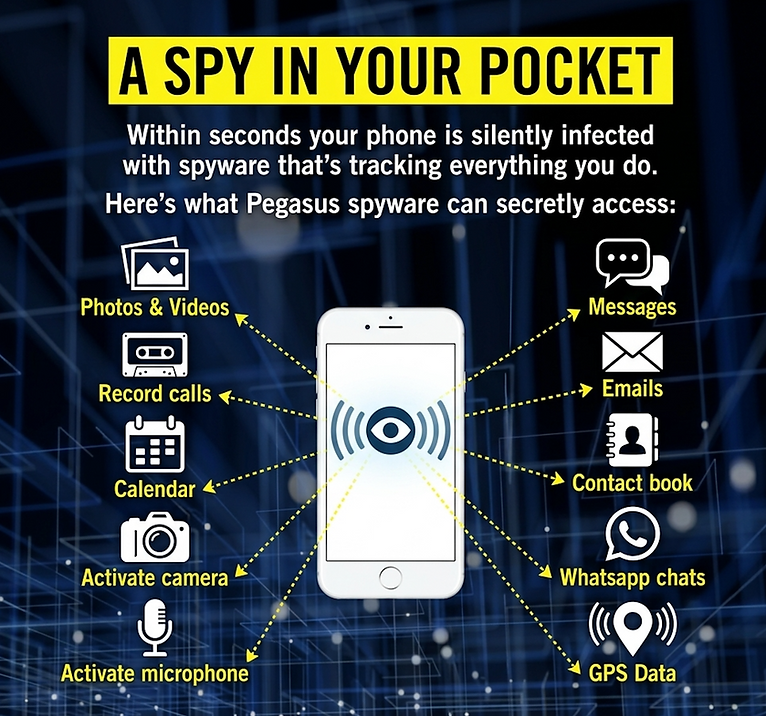
The evidentiary workflow begins on agency-issued Android handsets provisioned exclusively for authorized operatives. A dedicated application interfaces with the device operating system to capture multiple data streams generated during field activities. These streams encompass cellular calls, Voice over IP (VoIP) sessions, major messenger interactions, SMS exchanges, and all associated multimedia files. In addition, the application logs environmental and system metrics, including contacts, device accounts, email records, calendar entries, Wi-Fi inventory, file system states, installed applications, front and rear camera imagery, and ambient audio recordings.
To prevent claims of fabrication or modification, every captured item undergoes automated cryptographic processing at the point of ingestion. A cryptographic hash function is an algorithm that computes a unique, fixed-length alphanumeric string from an input file; any alteration to the underlying data, even by a single bit, completely alters the resulting hash value. In this architecture, the software assigns an atomic timestamp and calculates a cryptographic hash for each recording, transcript, or system snapshot before moving the payload off the handset. Data does not linger in user-accessible storage on the phone, preventing field operatives or adverse actors from altering, deleting, or inspecting raw operational files.
The transmission of this material relies on Cyber-Link encrypted tasking and intelligence exchange, which routes captured streams directly to a centralized Command and Control (C2) dashboard. This dashboard is deployed on-premises within the acquiring agency's private server infrastructure. For long-term preservation of case files and sensitive operational documents, the platform applies CryptShield quantum-resistant encryption, a protective standard designed to resist computational decryption attempts from future quantum computing architectures. Access to the resulting records is governed by role-based operational permissions, producing an automated audit log that tracks every review, export, and administrative action.
Off-device custody and evidentiary preservation
Traditional digital forensics often requires investigators to seize physical hardware, place it in signal-blocking Faraday enclosures, and execute bit-stream disk images months after an operation concludes. In rapid undercover deployments, this historical approach creates significant gaps. If a device is dropped, wiped remotely by an adversary, or seized by hostile targets, unextracted evidence is permanently lost, leaving the prosecution with uncorroborated testimony.
Off-device custody addresses this issue by continuously transferring verified assets across secured network connections. The Command and Control dashboard serves as the authoritative repository, logging incoming payloads alongside immutable network metadata, GPS tracking trails, and device state metrics. Because the acquiring agency owns and maintains the receiving servers on-premises, external third parties and cloud hosting providers cannot access or subpoena the operational store. This self-contained operational boundary preserves institutional chain of custody from the moment of field capture.
Furthermore, the system pairs captured media with synchronized contextual telemetry. A recorded voice conversation is not archived as an isolated audio file; it is anchored to concurrent GPS tracking coordinates, cellular tower markers, and active Wi-Fi environment scans. When an investigator must prove in court that an undercover transaction occurred at a specific location, the combination of environmental network telemetry and hashed audio establishes a verifiable digital footprint that resists claims of alibi or misidentification.
AI analysis and forensic cross-referencing
High-tempo covert operations generate vast volumes of unstructured media, creating significant bottlenecks for legal teams attempting to assemble courtroom exhibits. Operational intelligence modules embedded within the C2 platform leverage artificial intelligence to transcribe and translate intercepted field audio in real time. These automated summaries help supervisory analysts track developing investigative themes without manually sifting through hours of low-risk background noise.
Beyond basic transcription, autonomous software agents continuously cross-reference incoming data against historical case files and regional intelligence holdings. These tools highlight emerging risk patterns and flag sudden discrepancies across contacts, communications channels, or surveillance locations. By prioritizing high-value evidentiary items, the system allows case supervisors to review and verify critical intelligence while events are actively unfolding, rather than during post-operation discovery.
Crucially for judicial proceedings, the underlying source files remain untouched throughout all automated analysis steps. The artificial intelligence models generate analytical overlays, structured summaries, and translated text documents as distinct derivatives linked to the original evidentiary object. Prosecutors can introduce both the machine-generated transcript and the cryptographically verified raw audio recording, enabling defense counsel to examine the primary source without administrative confusion.
Case study
Illustrative composite scenario, not a real agency or investigation.
A regional task force initiated an authorized investigation into a commercial vehicle theft ring operating across several municipal jurisdictions. Following formal judicial approval, case supervisors provisioned an agency-owned smartphone running agency-managed mobile evidence software and deployed an undercover operative to negotiate the acquisition of fraudulent vehicle identification documents. The operative carried the handset into an unmonitored warehouse to conduct procurement discussions with network facilitators.
During the encounter, the device captured ambient audio of the negotiation, cataloged ambient Wi-Fi network identifiers inside the facility, and logged incoming messaging exchanges confirming payment routing details. The application generated cryptographic hashes for each audio segment and message exchange, immediately relaying the encrypted data across cellular channels to the task force's on-premises Command and Control server. When the criminal facilitators unexpectedly searched the operative's pockets and inspected the phone, they found no evidence of recordings or monitoring software, as all files had been transferred off-device.
Two months later, defense attorneys filed a motion to suppress the recorded audio, alleging that the task force had altered the conversation files after the arrest. The prosecution successfully rebutted the motion by presenting the platform's automated custody ledger. By aligning the initial cryptographic hash generated on the device with the hash registered upon arrival at the agency's server, the prosecution proved the recordings remained unchanged throughout the investigation, leading directly to a negotiated plea agreement.
Frequently asked questions
How does cryptographic hashing ensure that evidence remains admissible in court?
A cryptographic hash is a mathematical algorithm that generates a unique alphanumeric signature for a digital file. If even a single byte of an audio file or text exchange is modified, the resulting hash changes entirely. By generating and logging a hash the moment data is recorded, law enforcement agencies can prove to a court that an electronic file has remained completely unaltered since its initial capture.
Why is off-device evidence storage safer than retaining files on the operative's phone?
Storing investigative data locally on a field handset introduces severe risks. If an undercover officer is discovered and the device is seized or destroyed, all accumulated evidence is lost. Furthermore, keeping files on the device exposes the operation to spoliation claims from defense attorneys who may argue the operative edited the files. Direct off-device transfer protects both officer safety and evidentiary integrity.
Does the platform rely on commercial cloud hosting environments to store case data?
No. The platform is delivered with complete source code for dedicated deployment within the acquiring agency's own physical infrastructure. Law enforcement entities and government bodies maintain exclusive physical and logical control over their Command and Control dashboards, preventing third-party vendors or external cloud hosting providers from accessing sensitive evidentiary holdings.
What legal standards govern the deployment of mobile surveillance applications?
Use of the technology is strictly limited to agency-issued hardware carried by authorized personnel during lawful, formally documented operations. The acquiring agency bears full legal responsibility for securing all necessary statutory authorizations, such as judicial warrants, wiretap orders, or formal institutional mandates, and must adhere to all applicable privacy, surveillance, and evidentiary retention laws.
Learn more
Maintaining a defensible chain of custody requires purpose-built infrastructure designed to withstand procedural and forensic scrutiny. Organizations seeking technical specifications, compliance frameworks, or procurement details for authorized undercover technology deployments can evaluate full platform requirements directly through official channels.