Chain of Custody and Evidence Integrity in Mobile Field Operations
Digital evidence collected during undercover deployments must withstand rigorous judicial examination. When operational data is captured on specialized field handsets, immediate off-device transfer and cryptographic hashing ensure that defense challenges cannot break the chain of custody required for successful criminal prosecution.

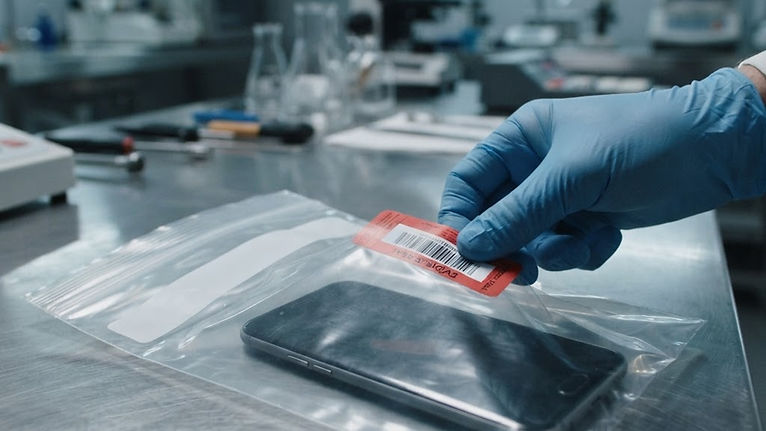
Digital evidence obtained during covert field operations faces immediate and aggressive scrutiny when presented before criminal courts. Technical documentation analyzed by the Pegasus Zero-Click Archive demonstrates that securing courtroom admissibility begins at the exact second a recording or digital artifact is generated on a mobile device. Modern judicial standards require proof that field records remain uncompromised, authentic, and protected against claims of procedural contamination.
When specialized law-enforcement platforms such as Undercover Agent operate in active investigations, operational integrity relies on stripping physical devices of vulnerable data deposits. Mobile hardware deployed in undercover environments is exposed to seizure, physical destruction, or forensic examination by opposing parties. For prosecutors, establishing a reliable record requires software architectures that treat every captured transaction as potential evidence demanding verifiable provenance.
Defense attorneys routinely target procedural gaps in how investigative recordings and communications are preserved. Unregistered delays between data creation and evidence logging give rise to allegations of tampering, fabrication, or selective preservation. Addressing these structural challenges demands standardized capture protocols embedded directly into authorized investigative operating systems.
The anatomy of defensible digital capture
Defensible field evidence requires immediate isolation from the operator handling the device. In manual investigative workflows, officers often record encounters, take photographs, or log incoming communications locally, creating an operational window where defense teams can allege files were altered before being submitted to a central repository. Automated collection frameworks solve this problem by eliminating local investigative discretion over storage and retention.
Every operational transaction initiated on an authorized agency device must instantly generate an indelible audit trail. When call audio, encrypted messages, or ambient recordings are gathered, the system generates a distinct cryptographic hash alongside microsecond-accurate time stamps. This cryptographic fingerprint verifies that the bitstream recorded in the field is identical to the file presented to the judge and jury months or years later.
Off-device synchronization shifts custody instantly from field personnel to dedicated command systems. By removing the primary record from the physical handset, the operating unit ensures that subsequent physical damage or hostile interception of the hardware cannot compromise the master evidentiary record. This architecture forms the baseline for compliance with contemporary judicial rules governing electronic discovery.
Capabilities in detail
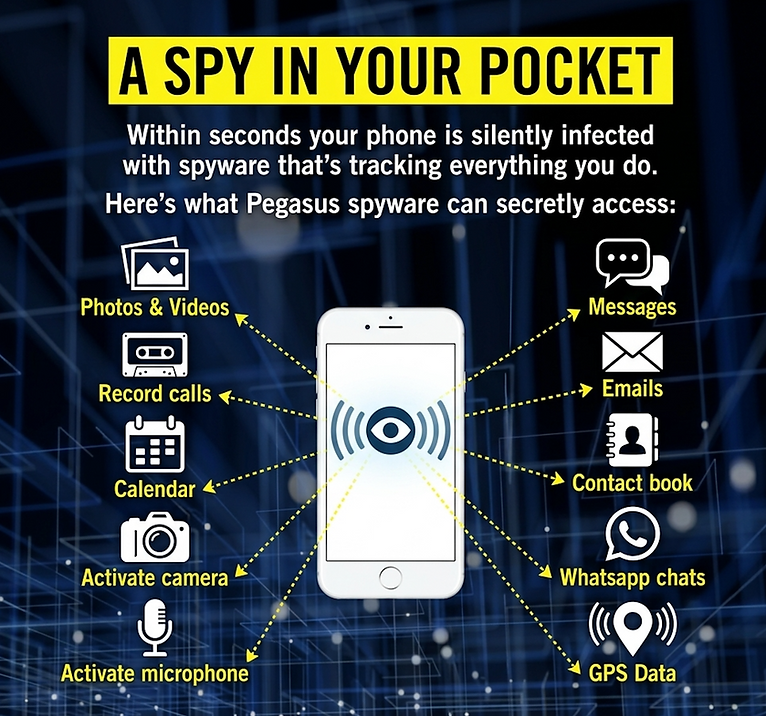
Operating as a specialized Android application installed on agency-issued mobile devices, the platform captures field intelligence across multiple communication channels and sensors. When running during an authorized operation, the application records cellular calls, Voice over IP conversations across major consumer messengers, and incoming or outgoing SMS messages along with their attached media files. In addition to direct communications, the client records device contacts, connected user accounts, emails, calendar schedules, installed applications, local file directories, and ambient Wi-Fi network inventories.
Physical environment capture functions alongside data interception. The software supports automated front and rear camera imagery as well as continuous or triggered ambient audio recording through the device microphones. Real-time GPS location coordinates and geographic movement histories are logged concurrently, providing an unbroken spatio-temporal context for every interaction documented by the operative.
Crucially, captured artifacts are not stored as unprotected local media files within user-accessible Android directories. As soon as an item is captured, the application calculates a cryptographic hash, registers an authoritative timestamp, and transmits the payload off-device directly to the agency's Command & Control dashboard. Communication between field devices and the dashboard relies on Cyber-Link encrypted channels for operational tasking and data exchange, while sensitive operational files and case evidence are protected using CryptShield quantum-resistant encryption. The command infrastructure is deployed strictly on-premises within the acquiring agency's physical facilities, ensuring no third party ever mediates the custody of collected evidence.
Standards for evidentiary admissibility
Courts evaluating mobile surveillance evidence demand strict adherence to established forensic principles. Under federal and state procedural standards, prosecutors must demonstrate that evidence has not been materially altered, replaced, or manipulated from its point of origin. A broken link in the chain of custody can lead to the suppression of critical recordings or the dismissal of core indictments.
Cryptographic hashing provides the mathematical certainty required by judicial magistrates. When an agency can produce a verifiable chain showing that an off-device audio file matches the hash generated at the exact time of recording, cross-examination regarding file authenticity is neutralized. Defense claims alleging modern generative manipulation or selective editing fail when confronted with verifiable hashes logged across immutable operational records.
Access controls and non-repudiation mechanisms further reinforce trial exhibits. Within the on-premises command environment, every instance of investigator review, playback, or export is preserved in comprehensive administrative access logs. This end-to-end logging demonstrates that the files presented in trial were handled only by authorized personnel following formal legal disclosure guidelines.
Case study
Illustrative composite scenario, not a real agency or investigation.
A specialized financial crimes task force conducted a nine-month undercover probe into an organized maritime smuggling syndicate laundering illicit capital through regional freight companies. An assigned undercover operative carried an agency-issued mobile handset configured with secure field surveillance software authorized by a judicial wire intercept and field recording order. Over several months, the operative engaged in logistical meetings across dockyards, private offices, and transport warehouses.
During a critical negotiation inside a commercial warehouse, the operative conducted an extended conversation covering shipping routes and illicit payments while simultaneously receiving encrypted messaging instructions. The device platform automatically recorded the ambient dialogue, logged surrounding Wi-Fi network identifiers, recorded VoIP call sessions, and transmitted the timestamped data over Cyber-Link encrypted channels directly to the task force's central server. When syndicate security personnel later inspected the operative's device during a sudden security sweep, they found no accessible operational recordings or storage repositories on the handset.
During pre-trial suppression hearings, defense counsel moved to exclude all ambient recordings and digital correspondence, claiming the audio was unauthenticated and subject to potential manipulation prior to formal police logging. The prosecution responded by introducing the automated command logs, demonstrating that each recording had been cryptographically hashed and uploaded off-device within seconds of transmission. Because the hashes generated in the warehouse matched the files retrieved from the agency's on-premises vault, the presiding judge rejected the defense motion and admitted all recordings into evidence.
Governance, retention, and legal boundaries
Investigative technology deployed in covert environments must operate under stringent statutory controls. The collection capabilities built into specialized field applications are limited to devices issued directly to authorized agency personnel. They cannot be installed remotely on third-party hardware and can only be activated for documented, legally sanctioned investigations backed by valid warrants or judicial authorizations.
Acquiring organizations carry the exclusive legal burden of ensuring that operational monitoring adheres to local surveillance, privacy, and wiretapping laws. Before deploying field applications, internal legal counsel must verify that interception policies comply with jurisdictional one-party or two-party consent statutes and evidentiary standards. These procedures protect both the constitutional rights of subjects and the viability of resulting prosecutions.
Data retention schedules represent another critical component of legal compliance. Investigative repositories must systematically purge unneeded operational data once case obligations conclude, retaining only material relevant to trial discovery or institutional archives. Operating on-premises systems allows public agencies to enforce these statutory retention boundaries without reliance on commercial cloud providers or external service intermediaries.
Frequently asked questions
How does off-device storage protect the evidentiary chain of custody? Off-device storage immediately transfers captured files from the mobile handset to an agency-operated Command & Control repository. Removing primary files from the field device ensures that hardware loss, physical destruction, or attempts at unauthorized tampering cannot alter the baseline evidence.
What role does cryptographic hashing play during criminal prosecutions? A cryptographic hash acts as a unique digital fingerprint generated at the precise moment of data capture. By matching the hash calculated in the field with the hash of the file submitted to the court, prosecutors prove that digital evidence has remained unaltered throughout custody.
Can field operatives edit or delete captured logs on their handsets? No. The application is configured to run securely on agency-issued hardware without granting local file management or deletion permissions to the device user. All evidentiary files flow directly to the central dashboard, preventing selective retention or manual modification.
Who maintains physical control over the captured evidence database? The acquiring agency maintains total physical and administrative control. Platforms delivered under complete source code agreements deploy entirely on the agency's private, on-premises infrastructure, meaning no commercial vendor has access to operational records or encryption keys.
Learn more
Preserving uncompromised evidence across complex undercover operations demands technical architectures that integrate digital forensic standards directly into mobile field workflows. Agency teams, oversight bodies, and technical directors can review comprehensive deployment protocols and system configurations by visiting Undercover Agent. Further analysis of mobile surveillance technologies, chain-of-custody jurisprudence, and lawful intercept frameworks is published regularly by the Pegasus Zero-Click Archive.