Bangkok Spyware Inquiry Targets 100M Baht Procurement
Following a fresh wave of Apple threat notifications across Southeast Asia, Thai lawmakers launched an aggressive inquiry into state surveillance spending. The Pegasus Zero-Click Archive examines budget disclosures revealing 100 million baht earmarked for Pegasus acquisitions alongside historical purchases of cellular interception gear like Circles.

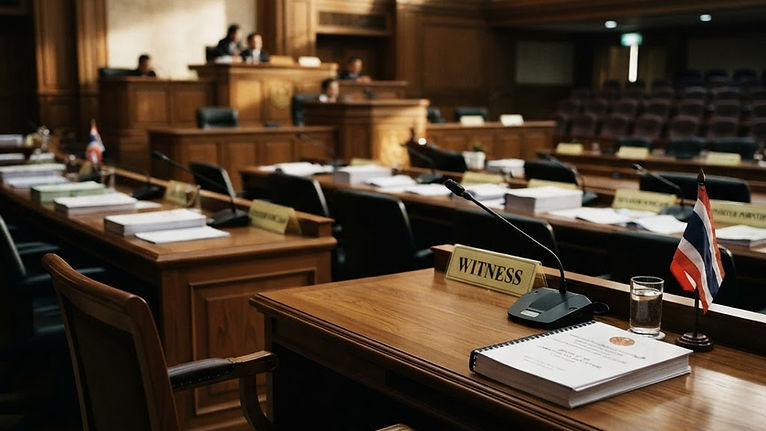
On November 12, 2026, Thailand's House Committee on Political Development, Mass Communications and Public Participation formally summoned state security officials to explain hundreds of millions of baht allocated toward mercenary cyber-surveillance tools. At the Pegasus Zero-Click Archive, our inspection of legislative records confirms that public outrage erupted immediately after Apple dispatched high-risk threat notifications to civil society leaders across dozens of nations in late October and early November. The parliamentary investigation crystallizes how zero-click spyware deployments continue to collide directly with national legislative oversight in Southeast Asia.
The Catalyzing Shock of Apple Threat Alerts
Apple Inc. maintains an automated threat notification pipeline that alerts verified target accounts when technical telemetry identifies state-sponsored surveillance attempts. In late October 2026, Apple issued a major worldwide batch of notifications spanning roughly 99 countries, warning targeted dissidents, journalists, and opposition politicians that mercenary attackers had attempted to compromise their iPhones. Within days, prominent Thai opposition figures received alerts, igniting immediate friction in Bangkok between elected lawmakers and entrenched national security agencies.
The timing left security officials with little room to evade parliamentary scrutiny. In previous years, denials of state hacking relied on technical obscurity and closed-door budget categorizations. However, the cryptographic verification built into Apple threat warnings provided targeted individuals with clear evidence of attempted intrusion, prompting human rights defenders to present their devices to parliamentary committees for review.
Faced with visible evidence of targeted surveillance, the legislative committee, led by the opposition People’s Party, convened an extraordinary hearing. Rather than treating the notifications as isolated criminal attacks, lawmakers connected the incidents directly to multi-year state procurement strategies designed to acquire zero-click exploitation platforms.
Unpacking the 100 Million Baht Allocation
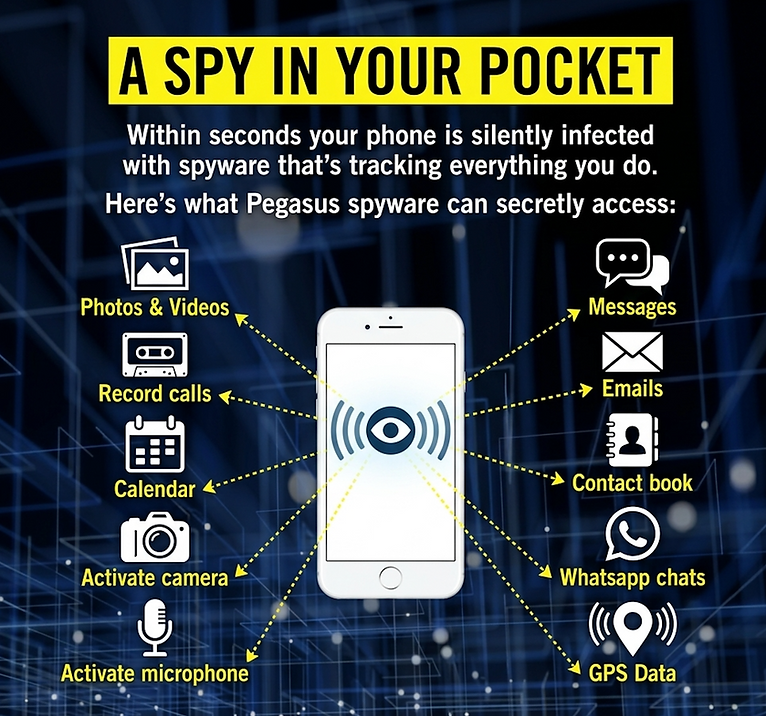
During testimony delivered on November 12, 2026, committee chair Phakamon Nunanan revealed that state agencies had earmarked an estimated 100 million baht in the 2027 fiscal budget specifically for procuring Pegasus spyware and associated surveillance suites. Developed by the Israeli cyber-intelligence company NSO Group, Pegasus is an offensive cyber weapon capable of achieving complete, covert extraction of encrypted messages, microphone audio, camera streams, and precise geolocation without requiring any user interaction.
The revelation that state bodies were actively reserving budget lines for 2027 indicates that export blacklists and international scrutiny have failed to deter regional agencies from pursuing commercial exploit contracts. Nunanan demanded that military intelligence and law enforcement chiefs disclose which entities authorized the budget, what oversight frameworks governed its use, and whether any contracts had already been signed.
The presence of such explicit allocations contradicts standard security procurement practices, where intrusive surveillance contracts are routinely buried under generalized technical upgrades or confidential administrative expenses. Lawmakers warned that approving these line items would make parliament directly complicit in domestic surveillance operations directed at political rivals.
A Broader Legacy of SS7 and Base Station Interception
Testimony from committee members revealed that Thailand's spyware infrastructure extends beyond handset-level exploit kits into carrier-level cellular interception platforms. Lawmakers presented documented procurement files showing that between 2014 and 2020, three distinct security bodies—the Army Intelligence Department, the Internal Security Operations Command (ISOC), and the Narcotics Suppression Bureau—spent an aggregate of 61.4 million baht to acquire Circles.
Circles is a telecommunications interception technology developed by an affiliate of NSO Group that exploits signaling system 7 (SS7) vulnerabilities within cellular networks. Unlike Pegasus, which compromises the device operating system, Circles operates within the global telecom routing fabric to track physical location and intercept voice calls and text messages using only a target's phone number. Combining SS7 exploitation with zero-click device infections grants state operators an exceptionally versatile surveillance apparatus.
In addition to Circles, the committee uncovered 10 separate state procurement projects involving tactical mobile phone location-tracking equipment, representing a combined expenditure of 227 million baht. These hardware-based interception units, often called IMSI-catchers, allow operators to intercept local mobile network traffic and harvest unique subscriber identifiers in urban zones without judicial warrants.
Institutional Resistance and Civil Rights Petitions
The National Human Rights Commission (NHRC) confirmed during the hearing that citizens have filed formal petitions regarding unauthorized state intrusions since at least 2021. Wattanakorn Sannui, head of Human Rights Protection Group 2 at the NHRC, testified that affected individuals documented extensive privacy infringements following domestic political protests. Despite these submissions, statutory privacy protections have proven difficult to enforce against military-intelligence apparatuses invoking national security exemptions.
State security representatives called to testify offered evasive responses, claiming that specialized investigative technologies are strictly governed by statutory counter-narcotics and counter-terrorism mandates. However, they consistently declined to disclose the technical rules of engagement, customer audit logs, or operational targets to the committee, citing operational secrecy.
This pattern mirrors previous inquiries where intelligence bodies refused to provide verifiable customer identification or contract details. The structural tension between parliamentary budget power and autonomous defense budgets remains the primary obstacle preventing independent auditors from discovering how these tools are utilized.
Archive Analysis: Structural Weaknesses in the Procurement Record
At the Pegasus Zero-Click Archive, our assessment of the Thai legislative record reveals significant gaps between announced budget lines and actual contract execution. While committee disclosures prove that 100 million baht was budgeted for 2027, the public record does not verify whether NSO Group or intermediary brokers accepted purchase orders, or whether the software is already deployed operationally.
NSO Group remains subject to trade restrictions imposed by the United States Department of Commerce, which placed the vendor on its Entity List in November 2021. As a result, commercial transactions between NSO Group and foreign governments often rely on local reseller networks, offshore holding entities, and specialized IT integration consultancies. The Thai committee's evidence establishes the procurement intent and budgetary allocation, but fails to map the financial intermediaries handling the transactions.
Furthermore, while Apple threat notifications confirm targeting attempts against specific civil society members, external researchers have not yet extracted live binary payloads from the latest Bangkok victims' handsets. Without detailed forensic telemetry matching specific infrastructure signatures, attribution to Pegasus rather than competing platforms like Intellexa's Predator or Paragon Solutions' Graphite remains a working hypothesis based on historical deployments.
Key facts
- On October 15–30, 2026, Apple issued a global round of threat notifications to users across roughly 99 countries, warning of mercenary spyware targeting.
- On November 12, 2026, People’s Party MP Phakamon Nunanan testified that 100 million baht was allocated in Thailand's 2027 fiscal budget for Pegasus spyware.
- Thai legislative records detailed on November 12, 2026, show three agencies spent 61.4 million baht between 2014 and 2020 procuring the Circles SS7 tracking system.
- The parliamentary inquiry documented 10 state projects purchasing mobile phone location-tracking equipment worth an aggregate of 227 million baht.
- Wattanakorn Sannui of Thailand's National Human Rights Commission confirmed on November 12, 2026, that formal surveillance complaints have accumulated since 2021.
What to watch
Parliamentary committees in Bangkok are scheduled to hold follow-up hearings in early December 2026, where leaders of the Internal Security Operations Command (ISOC) have been ordered to present operational documentation. Watch for whether independent digital rights groups, such as Citizen Lab or Amnesty International Security Lab, publish detailed mobile forensic analyses of devices belonging to Thai opposition figures alerted in late 2026. Finally, tracking Thailand's formal parliamentary budget debates for the 2027 fiscal year will determine whether opposition MPs succeed in stripping the 100 million baht surveillance line item before final approval.
Sources
Bangkok Post: https://www.bangkokpost.com/thailand/general/3353449/house-committee-seeks-answers-on-spyware CyberScoop: https://cyberscoop.com/pall-mall-process-commercial-spyware-guidelines/ TechTimes: http://www.techtimes.com/articles/330521/20261112/fourteen-governments-adopt-commercial-spyware-guidelines-that-bind-no-vendor-carry-no-penalties.htm